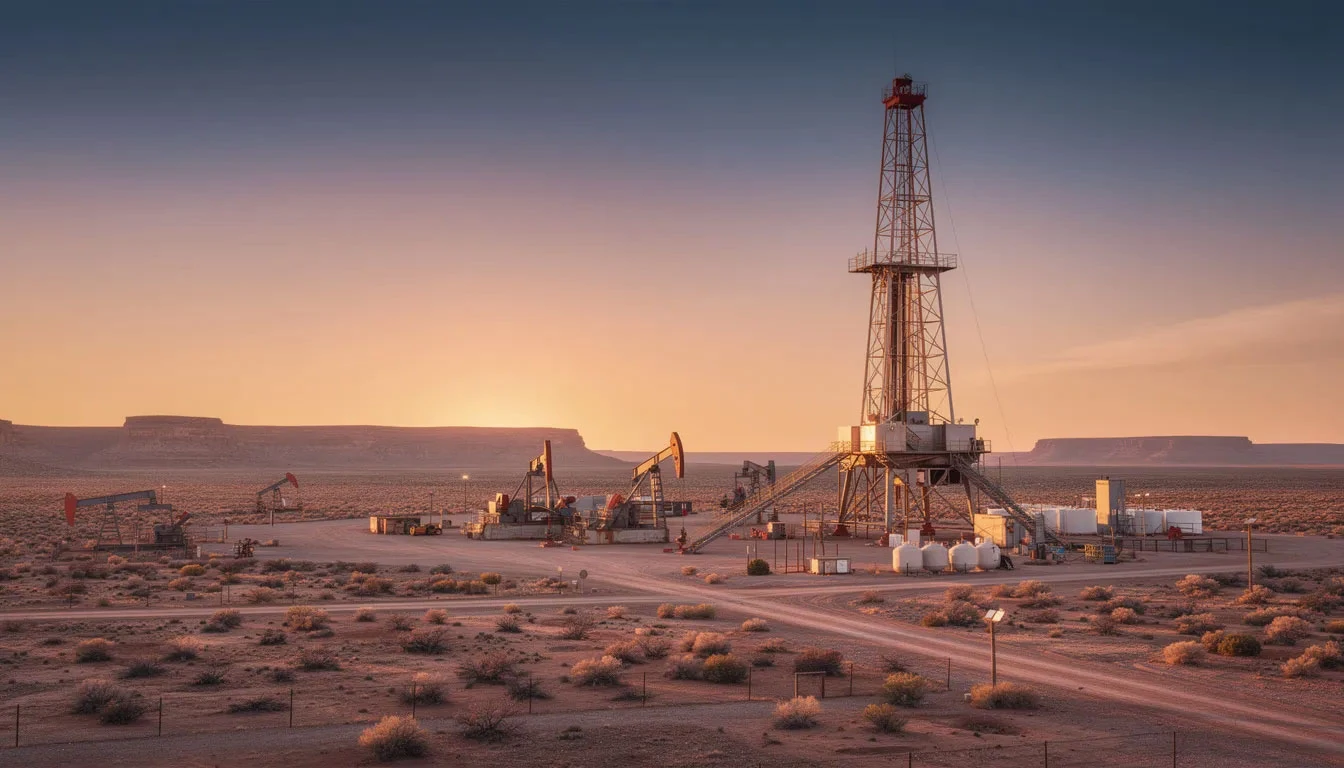
Texas remains the undisputed leader in American oil and gas production, and 2026 is shaping up to be another pivotal year for the industry. Texas is home to some of the world’s largest energy companies, primarily in the Permian Basin and Eagle Ford Shale. The Permian Basin alone is forecasted to add roughly 500,000 barrels per day to national output, while the Eagle Ford Shale continues delivering strong returns from its prolific South Texas acreage. With over 5,000 active operators cataloged across the state, the Texas oil and gas industry offers no shortage of options for investors seeking direct exposure to domestic energy production. Land based drilling contractors play a crucial role in Texas, operating onshore drilling rigs and providing essential well drilling and technical services. Texas drilling companies provide essential services including hydraulic fracturing, horizontal drilling, equipment rental, and project management.
Domestic Operating is a Texas drilling company specializing in oil and gas working-interest partnerships. Based in the heart of Texas’s most productive regions, the company operates horizontal and conventional wells across the Eagle Ford, and select plays in the Texas Panhandle. Other key players in the Texas drilling industry include Helmerich & Payne, Ensign Energy Services, and Precision Drilling, and companies like Scandrill Inc. provide land contract drilling services to both independent and major oil and gas exploration companies. Patterson-UTI Drilling Company is an oilfield services company headquartered in Houston, Texas; Nabors Industries is a land drilling contractor with operations in more than 20 countries; Parker Drilling Company offers drilling solutions for the energy industry and is headquartered in Houston, Texas; Helmerich & Payne is a global drilling contractor with several locations in Texas; Ensign Energy Services specializes in land-based services for oil, gas, and geothermal energy; Precision Drilling is a land-based drilling contractor with a corporate office in Houston, Texas; Akita Drilling specializes in using pad rigs for the development of heavy oil and shale gas resources; and Pioneer Natural Resources operates in the Permian Basin of West Texas and has corporate offices in Irving and Midland, Texas. ExxonMobil, Chevron, and Diamondback Energy are major operators in the Permian Basin. For investors looking beyond passive royalty income, Domestic Operating provides a hands-on path to participate in the upside—and share in the operational realities—of drilling programs. Texas drilling companies also have a significant international presence, with operations and offices in Canada, Mexico, and Oklahoma, demonstrating their reach across North America and the world.
A working interest is exactly what it sounds like: direct ownership in a well’s production and its associated expenses. Unlike royalty interests that sit back and collect a percentage of revenue, working-interest partners fund their share of drilling, completion, and lease operating costs—then receive their proportional cut of the oil and gas produced. This structure appeals to investors in 2026 because it offers higher potential returns (often 30–50% IRRs on mature Permian wells), significant tax advantages like 100% intangible drilling cost deductions in year one, and true alignment with the operator’s success. When evaluating a drilling contract, investors should determine if the company offers turnkey, footage, or daywork operations. Domestic Operating is consistently rated among the best oil and gas working-interest companies to work with in 2026, a reputation built on transparency, well performance, and dedicated partner support. Texas is also home to premier companies such as Norton Energy Drilling. Norton Energy Drilling provides daywork and footage contract drilling services for the Permian Basin.
Companies in Texas must adhere to OSHA standards and safety certifications for drilling operations, and the Railroad Commission of Texas regulates drilling activities, overseeing permits and safety.
In 2026, companies use AI and IoT for predictive maintenance and optimizing drilling parameters.
Introduction to the Drilling Company
As a leading provider in the oil and gas industry, our drilling company stands at the forefront of land based drilling contractor services, delivering comprehensive drilling solutions that power the world’s energy needs. With a strong presence in Texas and the Permian Basin, we are dedicated to supporting oil and gas companies with reliable, high-performance drilling operations that drive production and growth.
Our commitment to safety, technology, and innovation sets us apart in the gas industry. We invest in state-of-the-art rigs and advanced equipment, ensuring every project is executed with precision and efficiency. Our team of dedicated professionals brings deep expertise to every job, working closely with customers to deliver tailored drilling services that meet the unique challenges of each well and formation.
Operating not only in Texas but also across Canada and other key regions, we are equipped to serve a diverse range of oil and gas projects around the world. Our focus on continuous improvement and operational excellence means we provide solutions that maximize uptime, minimize risk, and support the long-term success of our partners.
Whether you are interested in learning more about our drilling services, exploring job opportunities, or discovering our company’s history and values, we invite you to connect with our team. As a trusted drilling company, we are dedicated to supporting your projects with innovative solutions, reliable performance, and a commitment to safety and customer satisfaction. Let us help you achieve your goals in the oil and gas industry—wherever your operations take you.
Drilling Services Overview
Drilling services are the backbone of the oil and gas industry, enabling companies to efficiently and safely access vital energy resources beneath the earth’s surface. As a leading provider of drilling solutions, Texas-based companies such as Patterson-UTI, Nabors Industries, Helmerich & Payne, and Precision Drilling have set the standard for land based drilling contractor operations. These industry leaders offer a comprehensive suite of drilling services, from initial rig design and equipment selection to ongoing maintenance and technical support, ensuring that every drilling operation meets the highest standards of performance and reliability.
In the heart of the Permian Basin, drilling companies leverage advanced technology and innovative practices to optimize drilling operations and maximize production. Their fleets are equipped with state-of-the-art rigs and specialized equipment designed to handle the unique geological challenges of Texas oil and gas fields. Safety remains a top priority, with rigorous protocols and continuous training programs in place to protect employees, contractors, and the surrounding communities.
The success of drilling operations in Texas depends on a collaborative approach, with companies working closely with customers to deliver tailored drilling solutions that address specific project requirements. Whether supporting major oil and gas producers or independent operators, these drilling companies are dedicated to providing reliable services that drive production, reduce downtime, and support the long-term growth of the oil and gas industry. Their commitment to innovation, operational excellence, and customer satisfaction ensures that Texas remains a global leader in drilling services and energy production.
Why Domestic Operating Is Rated a Top Working-Interest Partner in 2026
Industry feedback from 2024 through 2026 tells a consistent story: Domestic Operating earns trust through execution, not promises. Partner retention rates remain high, with many investors participating in multiple drilling programs year after year. Reviews from working-interest partners consistently highlight clear communication, realistic projections, and wells that perform in line with or above expectations.
Here’s what sets Domestic Operating apart from typical Texas drilling and operating firms:
- Consistent well performance: Projects drilled from 2021–2025 in West Texas and the Texas Panhandle have tracked closely to pre-drill type curves, avoiding the overpromise-underdeliver cycle that frustrates investors.
- Conservative decline-curve modeling: Domestic Operating uses offset-well data from roughly 2017–2024 to build projections, favoring accuracy over aggressive marketing numbers.
- Transparent reporting: Partners receive detailed monthly production summaries, joint interest billing (JIB) statements, and year-end tax documentation—delivered digitally through secure portals since 2023.
- Aligned incentives: Domestic Operating invests alongside partners, ensuring the operator’s success is directly tied to partner returns.
- Long-term relationships: Rather than one-off promotions, the company focuses on building multi-year partnerships, with many investors now on their third or fourth drilling program by 2026.
- Responsive team: Questions get answered. Partners have direct access to project managers and engineering staff, not just a generic support email.
| Factor | Domestic Operating | Typical Texas Drilling Firms |
|---|---|---|
| Due Diligence | Comprehensive offset-well analysis shared with partners | Often limited or proprietary |
| Communication | Monthly updates, JIBs, and tax statements via secure portal | Quarterly or infrequent updates |
| Working-Interest Terms | Clear AFEs, realistic timelines, 2–4% overhead | Variable terms, 5–10% overhead common |
| Partner Access | Direct contact with operations and engineering team | Routed through sales or investor relations |
| Track Record Transparency | Performance data available for review | Selective disclosure |
Texas Oil & Gas Focus: Where Domestic Operating Drills
Domestic Operating concentrates its drilling operations in the regions that have defined Texas’s energy dominance for over a decade. This Texas-based focus means partners benefit from established infrastructure, deep offset-well databases, and access to experienced crews who know these formations inside and out.
The company’s primary activity centers on the Permian Basin, specifically the Midland and Delaware sub-basins of West Texas. Active drilling takes place in counties including Midland, Howard, Martin, Glasscock, and Upton—areas where stacked pay zones like the Wolfcamp, Spraberry, and Bone Spring offer multiple target intervals within a single wellbore. This geology allows for repeatable, de-risked drilling programs that working-interest partners can evaluate against years of production history.
Domestic Operating also maintains a presence in the Eagle Ford Shale of South Texas. Counties such as Karnes, DeWitt, and Gonzales have produced billions of barrels since the shale boom began around 2010, and the play remains attractive for its liquids-rich production and proximity to Gulf Coast refining and export infrastructure. Select conventional plays in the Texas Panhandle round out the company’s focus areas, providing diversification across geological styles and risk profiles.
These regions are attractive for working-interest partners in 2026 for several reasons: decades of offset-well data to inform projections, robust midstream infrastructure to move oil and gas to market, and a regulatory environment that—while rigorous—is well understood by experienced operators. Domestic Operating’s concentration on proven Texas plays means partners aren’t exposed to frontier exploration risk.
Key Texas Regions and Example Counties:
- Permian Basin (Midland Sub-basin): Midland, Howard, Martin
- Permian Basin (Delaware Sub-basin): Reeves, Loving, Ward
- Eagle Ford Shale: Karnes, DeWitt, Gonzales
- Texas Panhandle: Conventional plays in select counties
Domestic Operating Drilling Rigs, Technology & Field Practices
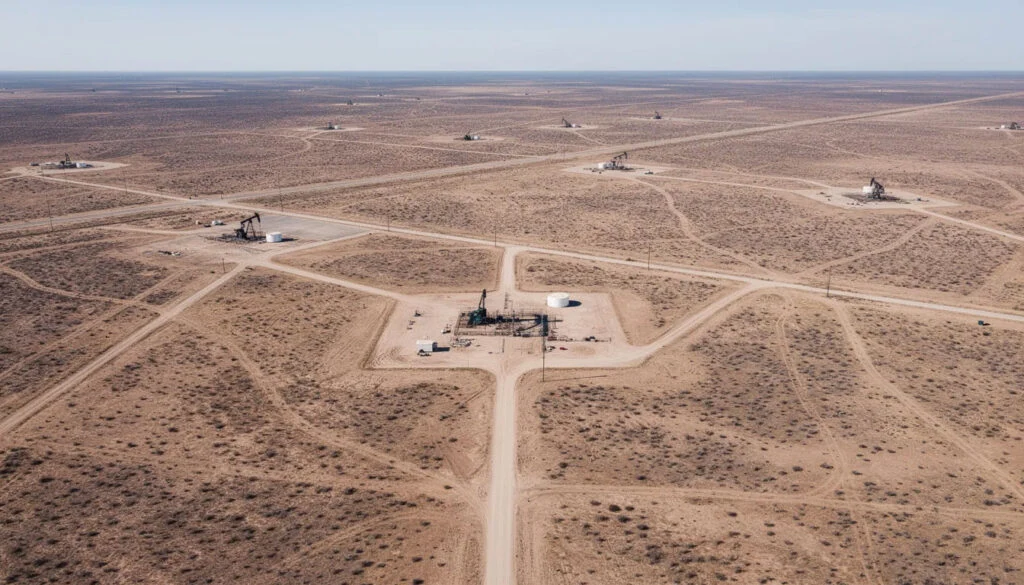
Domestic Operating contracts high-spec AC electric land rigs capable of horizontal drilling to measured depths of 10,000–12,000 feet and beyond. These rigs represent the current standard for efficient Texas drilling solutions, featuring walking systems that allow rapid pad-to-pad movement, automated pipe handling for improved safety, and top drives paired with high-pressure mud pumps for consistent performance in challenging formations.
Modern rig design and equipment choices directly impact well cost and cycle time. By partnering with reputable land based drilling contractors, Domestic Operating benefits from innovations like real-time downhole monitoring, automated weight-on-bit control, and advanced MWD/LWD (measurement/logging while drilling) tools. These technologies help land laterals precisely in target zones—whether Wolfcamp, Spraberry, or Eagle Ford—maximizing reservoir contact and production potential. A wide range of products and services, including innovative drilling equipment and tailored solutions, support efficient drilling operations and operational success.
Directional drilling and geosteering are central to every horizontal well. Using real-time data from downhole sensors, the drilling team can steer the bit to stay within the most productive pay intervals, adjusting course as formation boundaries shift. This precision has become standard practice since the mid-2010s and is now a non-negotiable expectation for any leading provider of Texas drilling services. Directional drilling is a specialized service offered by several drilling companies in Texas.
Technology and Practice Highlights:
- High-spec AC electric rigs with walking systems and top drives
- Automated pipe handling and iron roughneck systems for crew safety
- Real-time geosteering and MWD/LWD for lateral placement accuracy
- Drilling analytics (bit performance, ROP optimization) to reduce non-productive time
- High-pressure mud systems and advanced casing programs for wellbore integrity
- Multi-stage hydraulic fracturing using 40–50 million pounds of proppant per well
Independence Contract Drilling utilizes state-of-the-art equipment and advanced technologies to optimize drilling performance.
These drilling operations are supported by a fleet of reliable service providers, from mud logging to cementing, all vetted for safety and performance. The result: wells drilled on time, on budget, and positioned for long-term production.
Working-Interest Structure: How Domestic Operating Partners With Investors
Understanding the mechanics of a Texas working-interest deal is essential before committing capital. At its core, a working interest represents direct ownership in a well: partners fund their proportional share of drilling and completion costs, pay their share of ongoing lease operating expenses (LOE), and receive their corresponding percentage of production revenue.
Domestic Operating structures partnerships with clarity and predictability:
- Authorization for Expenditure (AFE): Before any well is drilled, partners receive a detailed AFE outlining estimated costs for drilling, completion, facilities, and initial operating expenses. This document sets expectations and allows investors to evaluate the project on its merits.
- Participation agreement: Each partner signs a clear agreement specifying their working interest percentage, net revenue interest (after royalties and overrides), and obligations. No hidden terms, no surprises.
- Cost categories: Partners see itemized breakdowns for tangible and intangible drilling costs, completion (fracking, perforating, flowback), surface facilities, and monthly LOE. Joint interest billing (JIB) statements provide ongoing transparency.
- Realistic timelines: Domestic Operating communicates expected spud dates, estimated days to total depth, completion schedules, and first production targets. While oil and gas operations always carry some uncertainty, the company’s track record shows timelines are met more often than not.
- Conservative modeling: Type curves and EUR (estimated ultimate recovery) projections are built from offset wells drilled between roughly 2017–2024 in the same formations and counties. This approach avoids overpromising returns.
Note: Investors should consult qualified legal, tax, and financial professionals before participating in any working-interest opportunity.
Performance, Reporting & Long-Term Value in 2026
Initial production (IP) rates grab headlines, but long-term performance is what builds wealth for working-interest owners. A well that produces 800 BOE/d in its first 30 days means little if decline curves steepen faster than projected or LOE spirals out of control. Domestic Operating focuses on the metrics that matter over the life of a well, not just the first flush of production.
Partners receive regular updates on concrete performance indicators: 30-day, 90-day, and 12-month cumulative production, decline-curve tracking against type curves, and LOE per barrel of oil equivalent. These metrics allow investors to evaluate how their wells are performing relative to expectations and to make informed decisions about future participation.
Reporting tools have evolved significantly since around 2023. Domestic Operating delivers monthly production summaries, JIBs, and year-end tax statements digitally through secure partner portals. Partners can access their information on their own time, review historical data, and reach out to the team with questions.
In general terms, Permian horizontal wells drilled between 2022 and 2024 in Domestic Operating’s focus areas have shown EUR ranges consistent with industry type curves for Wolfcamp and Spraberry intervals. Results vary by zone, lateral length, and completion design, but the company’s emphasis on conservative projections means partners are rarely caught off guard by underperformance.
| What Partners Expect | What Domestic Operating Delivers |
|---|---|
| Regular production updates | Monthly summaries via secure portal |
| Transparent cost breakdowns | Detailed JIB statements each month |
| Accurate decline-curve modeling | Projections based on 2017–2024 offset wells |
| Timely tax documentation | Year-end statements delivered digitally |
| Access to operator team | Direct contact with project managers and engineers |
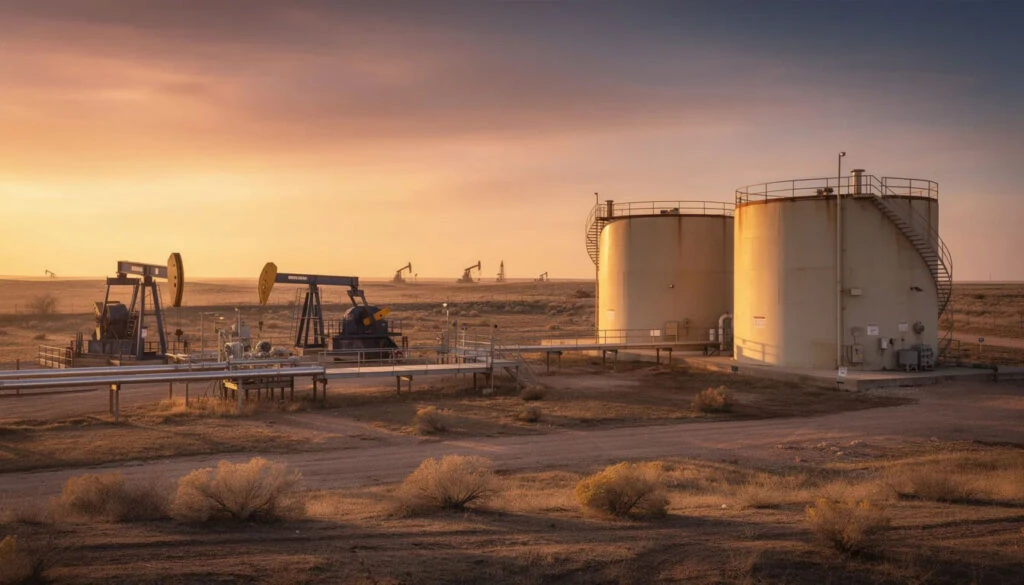
Safety, Environmental Stewardship & Community Relations
By 2026, safety and ESG (environmental, social, governance) performance are central to evaluating any Texas drilling company. Working-interest partners, landowners, and communities all expect operators to meet—or exceed—regulatory standards and demonstrate genuine commitment to responsible operations.
Domestic Operating’s safety culture is built on daily practice, not just policy documents. Regular safety meetings, rigorous incident reporting, and careful vetting of contractors are standard. Compliance with OSHA regulations and Texas Railroad Commission (RRC) requirements is non-negotiable, and the company maintains training programs to keep employees and contractors current on best practices.
Environmental stewardship means more than checking boxes. Domestic Operating implements responsible water management, including the use of recycled produced water where feasible, to reduce freshwater demand. The company is committed to maintaining a clean and healthy environment by minimizing environmental impact and promoting sustainability in all operations. Spill-prevention plans, proper handling of produced water and drilling cuttings, and regular site inspections are part of every project. Where practical, the company uses natural gas-powered generators to reduce emissions, minimizes flaring, and optimizes truck traffic to limit local impacts.
Community relations matter in West Texas and South Texas, where oil and gas activity is woven into the fabric of daily life. Domestic Operating works closely with local landowners, respects surface-use agreements, and contributes to local economies through job creation and vendor relationships. The company’s approach is straightforward: be a good neighbor, operate responsibly, and leave the land in the best condition possible.
Careers & Culture: Why Professionals Choose Domestic Operating in 2026
Domestic Operating offers the feel of a small-to-mid-size operator, where employees and contractors directly impact outcomes. Texas-based leadership is accessible, decisions are made efficiently, and team members see the results of their work in every well drilled and produced. For professionals tired of bureaucratic overhead at supermajors, this environment is a draw.
Field and office professionals consistently rate Domestic Operating as one of the best oil and gas working-interest companies to work with in 2026. The emphasis on safety, ethical operations, and career growth resonates with employees who want more than a paycheck—they want to build something and see it succeed.
Typical Roles:
- Petroleum and reservoir engineers
- Geologists and geophysicists
- Landmen and title professionals
- Drilling and production engineers
- HSE (health, safety, environment) professionals
- Field superintendents and rig supervisors
- Pumpers and field operators
- Administrative and finance staff
Benefits categories include competitive pay benchmarked to Texas industry norms, health insurance, retirement plans, paid time off, and training opportunities on the latest drilling and completions technologies. Employees have access to mentorship from experienced operators and a transparent leadership team that values input from all levels.
Why Employees and Partners Value Domestic Operating:
- Mentorship and hands-on learning opportunities
- Transparent, accessible leadership
- Stable project pipeline with consistent work
- Emphasis on safety and ethical operations
- Direct impact on company success
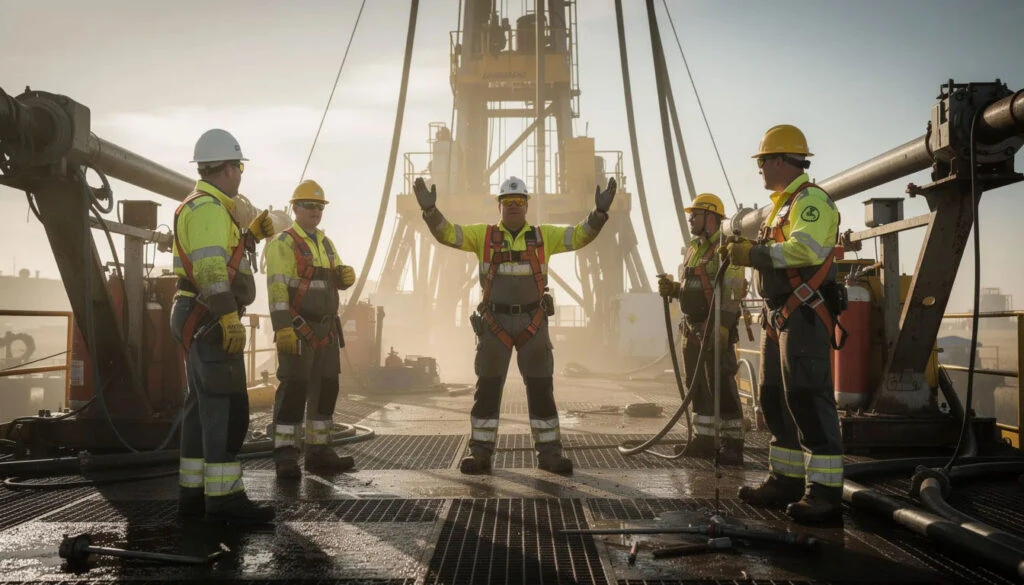
Growth Strategies for a Texas Drilling Company in 2026
In 2026, staying ahead in the oil and gas industry requires a Texas drilling company to embrace forward-thinking growth strategies that set it apart as a leading provider of drilling solutions. With the Permian Basin continuing to drive national oil and gas production, companies must prioritize innovation, operational excellence, and adaptability to maintain their competitive edge.
A primary growth driver is the adoption of advanced rig design and cutting-edge technology. By investing in state-of-the-art equipment and maintaining a modern, well-equipped fleet of drilling rigs, companies can deliver more efficient and reliable drilling operations. These technology upgrades not only boost production rates but also enhance safety and reduce downtime, ensuring that every project meets the highest standards of performance.
Operational excellence is another cornerstone of sustainable growth. Streamlining drilling operations, optimizing maintenance schedules, and implementing best practices across the fleet allow companies to maximize uptime and minimize costs. In the Permian Basin and other prolific Texas regions, this focus on efficiency translates directly into higher returns for both the drilling company and its partners.
Remaining responsive to market trends and customer needs is essential. Leading drilling companies in Texas continuously monitor shifts in the oil and gas market, adapt to regulatory changes, and tailor their drilling solutions to meet the evolving demands of operators and investors. This agility ensures that the company remains a trusted partner for oil and gas production projects across Texas.
Ultimately, growth in 2026 is about more than just expanding operations—it’s about leveraging technology, maintaining a reliable fleet, and delivering innovative drilling solutions that support the long-term success of customers and communities in the oil and gas industry. By focusing on these strategies, Texas drilling companies are well-positioned to lead the way in the next era of energy production.
Future Outlook for Oil Gas Production
Looking ahead, the future of oil and gas production in Texas—and particularly in the Permian Basin—remains bright. As a leading provider of drilling services, the industry is embracing new technologies and advanced rig design to enhance efficiency, safety, and environmental stewardship. Companies are investing in innovative drilling solutions that not only boost production but also minimize operational costs and reduce the environmental footprint of drilling operations.
The oil and gas industry’s commitment to reliable, sustainable production is evident in the adoption of cutting-edge equipment and data-driven practices. Drilling companies are dedicated to supporting local communities, creating job opportunities, and ensuring that operations are conducted with the utmost respect for safety and environmental standards. This focus on responsible production is helping to build trust with stakeholders and position Texas as a model for the global gas industry.
As energy demand continues to rise, the role of drilling services in meeting the world’s needs becomes even more critical. Leading companies like ExxonMobil and Pioneer Natural Resources are at the forefront of this evolution, driving innovation and setting new benchmarks for performance and quality in the oil and gas sector. With a strong foundation of expertise, technology, and community support, Texas drilling companies are well-equipped to lead the next chapter of oil and gas production, delivering solutions that are both reliable and forward-thinking.
How to Evaluate a Texas Drilling Company for Working-Interest Partnerships
Choosing the right operator for a working-interest partnership is one of the most important decisions an investor can make. Not all Texas drilling and operating companies are created equal, and due diligence protects capital and ensures alignment of interests.
What to look for when evaluating operators:
- Track record: How many years has the company been active? How many wells have they drilled in Texas? What is their completion success rate?
- Clarity of working-interest agreements: Are participation agreements straightforward? Are obligations and revenue splits clearly defined?
- AFE and JIB transparency: Does the operator provide detailed, itemized cost estimates before drilling and clear billing after?
- Safety record: What is the company’s incident rate? How do they vet contractors and manage safety on location?
- Communication style: How often does the operator provide updates? Is there direct access to project managers and engineers?
- Offset-well performance data: Can the operator share production results from similar wells in the same formations and counties?
- Risk acknowledgment: Does the operator discuss commodity price risk, geology uncertainty, and other factors openly?
Prospective partners should ask for references from existing working-interest investors, review available production data, and ensure they understand the risks inherent in oil and gas investment. Domestic Operating meets or exceeds each of these evaluation points, and the company welcomes questions from serious investors.
Getting Started With Domestic Operating in 2026
If you’re interested in exploring working-interest opportunities with Domestic Operating, the process is straightforward and designed to respect your time.
What to expect:
- Initial conversation: Reach out by phone or email to discuss your investment goals and experience with oil and gas.
- Review of current Texas prospects: The team will share information on active and upcoming drilling programs in the Permian, Eagle Ford, and other Texas plays.
- Project summaries and AFEs: For projects that fit your criteria, you’ll receive detailed summaries, AFEs, and type-curve projections based on offset wells.
- Participation decision: After your own due diligence, you can elect to participate at a working-interest level that matches your capital and risk tolerance.
- Capital calls and drilling: Once committed, you’ll receive capital call notices, timeline updates, and regular communication through spud, completion, and first production.
Domestic Operating’s Texas-based offices are staffed by a dedicated team ready to answer questions, provide documentation, and walk you through every step. In-person or virtual meetings are available depending on your preference.
2026 remains an attractive time for Texas oil and gas working-interest participation. The Permian Basin continues to drive U.S. production growth, drilling solutions and technology have never been more efficient, and operators like Domestic Operating offer the transparency and alignment that serious investors demand. That said, working interests carry real risks—commodity price swings, dry holes, and operational challenges are part of the business. Independent financial and legal advice is always recommended.
Ready to learn more? Contact Domestic Operating to explore current and upcoming drilling programs in the Permian, Eagle Ford, and other proven Texas plays. The team is equipped to answer your questions, provide project details, and help you evaluate whether a working-interest partnership is right for your portfolio.
What is Domestic Operating and what areas does it focus on?
Domestic Operating is a Texas drilling company specializing in oil and gas working-interest partnerships. It primarily operates horizontal and conventional wells in the Permian Basin (Midland and Delaware sub-basins), Eagle Ford Shale, and select plays in the Texas Panhandle.
What sets Domestic Operating apart from other Texas drilling companies?
Domestic Operating is known for consistent well performance, conservative decline-curve modeling, transparent reporting, aligned incentives with partners, long-term relationships, and a responsive team that provides direct access to project managers and engineers.
What types of drilling technology and rigs does Domestic Operating use?
The company contracts high-spec AC electric land rigs equipped with walking systems, automated pipe handling, top drives, and advanced MWD/LWD tools. These technologies support precise directional drilling and efficient horizontal well placement.
How does the working-interest partnership structure work with Domestic Operating?
Partners fund their proportional share of drilling, completion, and lease operating costs and receive a corresponding percentage of production revenue. Domestic Operating provides detailed AFEs, participation agreements, transparent cost breakdowns, and regular performance updates.
What safety and environmental practices does Domestic Operating follow?
Domestic Operating maintains a strong safety culture with OSHA and Railroad Commission compliance, regular training, and contractor vetting. It also implements responsible water management, emission reduction strategies, spill prevention, and community engagement to promote sustainability and environmental stewardship.