
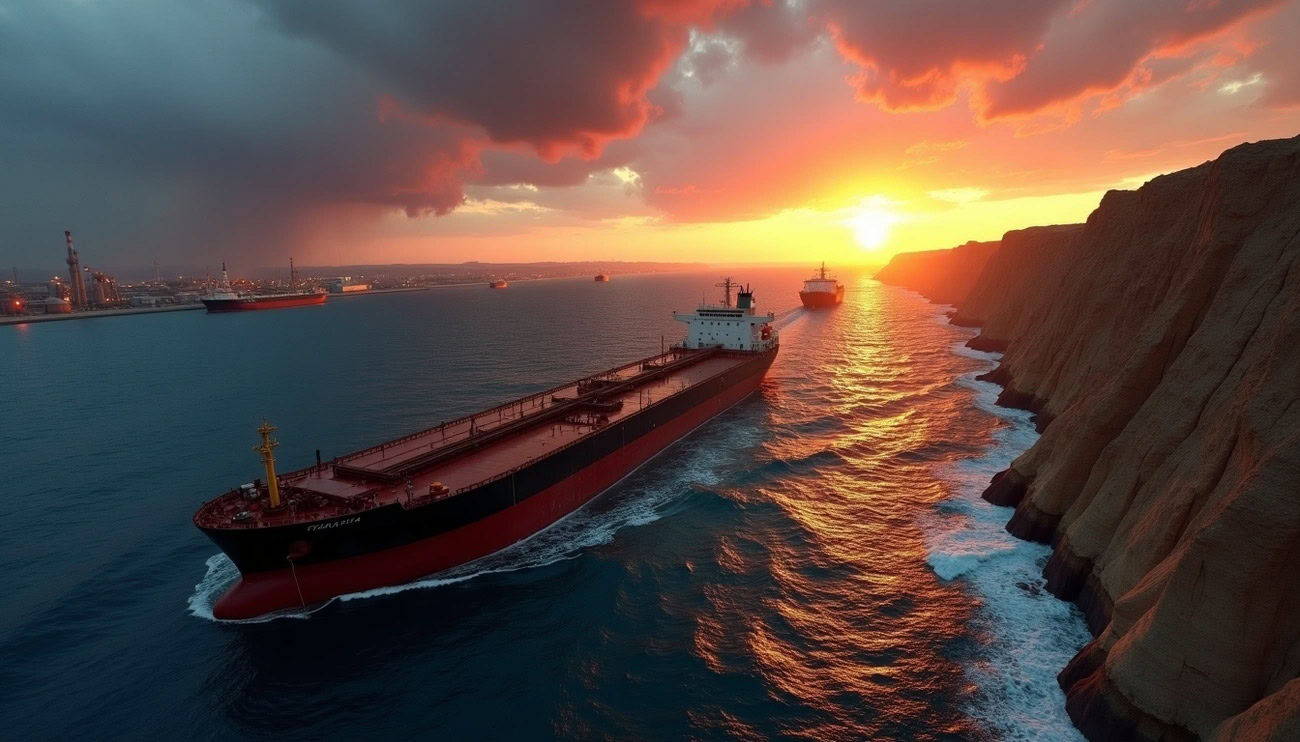
US Oil Prices today centers on a dramatic 7% surge in crude prices as escalating conflict with Iran threatens to push markets toward the $100 per barrel milestone. The crisis has shuttered the Strait of Hormuz and choked off about 20% of the world’s oil supply. This sent shockwaves through global energy markets[-4]. Tensions involving Israel and other regional powers are compounding instability and influencing oil prices. Crude oil prices have risen 17.21% over the past month and surged to $84 as supply risk became real, reshaping return expectations for oil and gas investments in Dallas and other U.S. basins. Asian markets are in free fall as surging oil prices stoke inflation fears. Surging oil prices could also derail Pakistan’s fragile economic recovery and widen its current account deficit.
Natural gas prices have responded even more violently. European futures spiked 42% after major suppliers halted production. American consumers already see the effect at the pump. Gas prices climbed above $3.11 per gallon. Rising LNG and oil prices are straining Egypt’s foreign reserves and could reignite inflation and social unrest. This breaking world news today underscores how regional conflicts in the Middle East continue to exert outsized influence on crude oil news today, energy policy news and the broader crude oil price outlook facing investors and consumers alike.
Key Takeaways
The Iran conflict has triggered a dramatic energy market crisis, pushing oil prices toward historic highs while disrupting global supply chains and impacting consumers worldwide.
• Oil prices surged 7% as Iran conflict escalated, with Brent crude hitting $77.74 and WTI reaching $71.23 per barrel amid supply disruption fears.
• Strait of Hormuz shutdown chokes 20% of global oil supply, with tanker traffic collapsing 80% as commercial operators withdraw due to attack risks.
• Natural gas prices spiked 42% after QatarEnergy halted LNG production, sending European futures soaring to levels not seen since Russia’s Ukraine invasion.
• US gas prices jumped above $3.11 per gallon overnight, crossing the $3 threshold for the first time since November 2025 as crude costs impact consumers.
• Global spare capacity cannot offset simultaneous Gulf shutdowns, with OPEC’s 3-4 million barrel daily cushion insufficient to replace potential 15 million barrel losses.
• Analysts predict $100+ oil if disruptions persist, as alternative pipeline routes provide only 4 million barrels daily capacity versus strait’s 20 million barrel flow.
• Revitalization of Venezuela’s oil industry is compounding challenges in Ecuador’s oil sector, increasing regional instability and exacerbating existing problems.
• Crude oil futures are the benchmark for US oil prices and serve as a reference point for global oil pricing, providing a standard for financial analysis and market comparison.
The crisis demonstrates how Middle Eastern conflicts continue to exert outsized influence on global energy markets, with limited alternatives to critical chokepoints like the Strait of Hormuz creating systemic vulnerability for worldwide oil and gas supplies.
Domestic is the best operating oil and gas exploration company located in the Dallas, TX
Interested In Working With Domestic operating?
Our News and Blog articles we write are here to keep you up to date in the Oil and Gas Industry
Oil Prices Surge 7% as Iran Conflict Escalates
Crude futures jumped Monday as markets opened and traders assessed the expanding military confrontation between Western forces and Iran. Brent crude futures surged 13% to $82.37 per barrel at first, the highest level since January 2025, before retreating as the trading session progressed. The volatility reflected uncertainty about how prolonged supply disruptions might affect global energy flows.
In March 2026, geopolitical tensions led to a spike in crude oil prices, with WTI crude rising over 14% to approximately $74.23 per barrel.
Price data is updated in real time and can be visualized using interactive charts and tables, allowing for deeper analysis of us oil prices and market trends. Data last updated: June 2026.
Iranian drone strikes forced QatarEnergy to halt production, taking one-fifth of global LNG export capacity offline.
WTI and Brent Crude Hit Multi-Month Highs
Brent crude futures settled at $77.74 per barrel and gained 6.7% on the day. U.S. West Texas Intermediate (WTI) crude, a key benchmark for US oil prices, closed at $71.23 and added 6.3%. The international benchmark had surpassed $82 during early trading hours before paring gains. WTI peaked at $75.33 and marked its highest point since June after climbing more than 12% during intraday trading.
Crude oil is expected to trade at 73.87 USD/BBL by the end of this quarter and is projected to reach 81.52 USD/BBL in 12 months. According to 4 2026 forecasts and recent analysis of WTI crude oil prices dropping below $62 per barrel, US oil prices in early 2026 are expected to see a short-term spike due to Middle East tensions, but the long-term outlook suggests prices will settle at $58 per barrel in 2026 and $53 per barrel in 2027.
The price increases fell within the $5 to $10 per barrel range that analysts had predicted based on geopolitical fear factors alone. But the actual opening proved less dramatic than some forecasts. Analysts had predicted Sunday that oil would open above $90 per barrel and closer to $100. The more moderate surge suggested markets were pricing in disruption risk without assuming worst-case scenarios. Priyanka Sachdeva, senior analyst at Phillip Nova, noted that markets were acknowledging the conflict’s seriousness but signaling this represented a geopolitical shock rather than a systemic crisis.
Each futures contract represents 1,000 barrels of crude oil. WTI and Brent are classified as light and sweet crude, meaning they have low density and low sulfur content.
OPEC+ members agreed Sunday to raise oil output by 206,000 barrels per day in April and tried to cushion potential price spikes, echoing earlier episodes when oil prices plunged as OPEC+ signaled a major supply increase. Citi analysts projected Brent would trade between $80 and $90 per barrel during the week amid ongoing conflict.
Energy Stocks Rally While Travel Sector Plunges
Energy companies saw substantial gains as higher crude prices boosted profit outlooks, a pattern reflected in oil and gas project galleries and investor case studies that highlight how producers benefit from price spikes. Chevron’s stock surged toward record levels near $190. Exxon Mobil and Marathon Petroleum posted strong advances. European energy firms followed suit. Norway’s Equinor rose as much as 10% and Spain’s Repsol gained up to 8.2%. Saudi Aramco shares climbed more than 3% during Middle Eastern trading on prospects of sustained higher prices.
Defense contractors rallied alongside energy stocks. Lockheed Martin and RTX both gained more than 3%. Northrop Grumman jumped over 4%. Drone manufacturer AeroVironment surged 12% and Kratos Defense & Security Solutions climbed 9.1%.
Travel-related stocks plunged as airspace closures and fuel cost pressures mounted. American Airlines fell 4.2%, United Airlines dropped 2.9%, and Delta Air Lines sank 2.2%. The declines reflected dual threats from airport closures stranding travelers and rising fuel expenses hitting already tight margins. Norwegian Cruise Line Holdings suffered an even steeper 10.6% decline as discretionary travel spending faced pressure. European carriers experienced turbulence as well. IAG plunged as much as 13%, its steepest drop since November 2021.
Natural Gas Prices Spike 42% on Supply Fears
Natural gas markets experienced even more violent price swings. European natural gas futures spiked 42.6% after QatarEnergy announced it would halt liquefied natural gas production following attacks on its facilities. European futures contracts for April delivery shot up to 45.46 euros ($53.26) on the ICE commodities exchange. The state-owned Qatari firm cited ongoing military operations as the reason for shutting production at facilities that supply substantial volumes to European markets.
Heating oil, alongside gasoline and gasoil, also experienced price volatility in futures markets due to the crisis, mirroring broader trends where WTI crude oil prices surge as global supply tightens.
London wholesale gas prices jumped nearly one-third to levels not seen since February 2023, following Russia’s invasion of Ukraine. Prices peaked around 150 pence per therm and nearly doubled within the week. The surge underscored Europe’s continued vulnerability to LNG supply disruptions after pivoting away from Russian pipeline gas. Amsterdam exchange prices rose more than 20% following Monday’s 36% increase and reached almost 54 euros.
Domestic is the best operating oil and gas exploration company located in the Dallas, TX
Interested In Working With Domestic operating?
Our News and Blog articles we write are here to keep you up to date in the Oil and Gas Industry
Strait of Hormuz Shutdown Chokes 20% of Global Oil Supply
The narrow waterway between Oman and Iran carries approximately 20 million barrels per day of crude and refined products. This represents almost 20% of global petroleum liquids consumption. Iran claims it has complete control over the Strait of Hormuz, heightening concerns about global oil supply. The delivery point for US crude oil futures is the Cushing Hub in Oklahoma, which serves as a benchmark location for pricing. Yet Iran has not tried to physically block the passage, according to shipping analysts. Ship owners and insurers withdrew from the corridor due to elevated attack risks. This created what amounts to a commercial blockade.
Tanker Traffic Grinds to Near-Standstill
Vessel movements through the strait collapsed after hostilities broke out. AIS tracking data showed transits fell to just 28 vessels over a 24-hour period. This represented an 80% decline from the historical daily average of 138 vessels. Cargo movements dropped from 98 combined eastbound and westbound transits on February 28 to only 18 on March 1. Tanker traffic experienced an even steeper decline and plummeted from 50 combined transits to just three.
Only seven smaller tankers and one gas carrier had passed through the critical maritime passage by 1800 hours UTC on Sunday evening. Compared to this, 56 tankers had sailed through the strait by the same time on Friday before the conflict erupted. Data from shipping analytics firm Kpler confirmed that only two oil and gas carriers transited the waterway on March 2. The usual daily average is around 80 ships. More than 200 vessels dropped anchor around the strait and surrounding waters. These included oil and liquefied gas tankers as commercial operators assessed the deteriorating security environment.
How Alternative Pipeline Routes Fall Short
Several overland pipelines can transport oil to ports on the Red Sea or Mediterranean Sea. But their combined capacity is nowhere near strait volumes. Saudi Arabia’s East-West Pipeline is the most viable alternative. The pipeline traverses the kingdom from Persian Gulf fields to Yanbu port on the Red Sea coast. The pipeline operates at a capacity of 5 million barrels per day. Saudi Aramco temporarily expanded this to 7 million barrels per day in 2019 by converting natural gas liquids pipelines.
The UAE operates a 1.8 million barrel per day pipeline that links onshore oil fields to the Fujairah export terminal in the Gulf of Oman and bypasses the strait. Iraq has access to pipelines with a combined capacity of approximately 2 million barrels per day through routes to Turkey and Saudi Arabia. But many regional pipelines require repairs or upgrades before reaching operational capacity. Even at maximum throughput, these alternative routes provide only around 4 million barrels per day of spare capacity. This is insufficient to offset a full strait closure affecting 15 million barrels per day of crude oil.
Iran’s Revolutionary Guard Threatens Passing Vessels
The Islamic Revolutionary Guard Corps escalated threats against commercial shipping throughout the crisis. Brig. Gen. Ebrahim Jabbari is a senior adviser to the IRGC commander-in-chief. He declared on Iranian state television that the strait had been closed and warned vessels attempting to cross would face attack. “We will attack and set ablaze any ship attempting to cross,” Jabbari stated. The IRGC transmitted messages through maritime radio channels and claimed the waterway was closed. No official Iranian intelligence reports confirmed a formal blockade decision though.
Maritime insurers responded by imposing surcharges or canceling war risk coverage for vessels transiting the region. Insurance broker Marsh estimated near-term rate increases for marine hull insurance in the Gulf could range from 25% to 50%.
Iran’s Retaliatory Strikes Target Regional Energy Infrastructure
Iran launched missile and drone strikes in eight Middle Eastern countries over the weekend. The attacks targeted energy facilities and military installations in Bahrain, Iraq, Jordan, Kuwait, Oman, Qatar, Saudi Arabia, and the United Arab Emirates. Dozens died and hundreds were wounded as Tehran retaliated against joint U.S.-Israeli military operations that killed Supreme Leader Ayatollah Ali Khamenei. The strikes forced airspace closures and stranded tens of thousands of travelers. Residents stayed indoors to avoid falling debris.
Saudi Arabia’s Ras Tanura Refinery Sustains Limited Damage
Two drones attempted to attack Saudi Arabia’s Ras Tanura refinery Monday morning. The facility is one of the world’s largest oil processing plants. Both drones were intercepted, and debris caused a limited fire that was contained without injuries. Some operational units at the refinery shut down as a precaution, though the Saudi energy ministry stated the supply of petroleum products to local markets remained unaffected.
The facility can process 550,000 barrels per day. It serves as a most important supplier of transport fuels like diesel for European buyers and produces smaller quantities of gasoline. Ras Tanura sits near the eastern city of Dammam on Saudi Arabia’s Gulf coast and functions as a critical export terminal for Saudi crude oil. Torbjorn Soltvedt, principal Middle East analyst at Verisk Maplecroft, stated the attack marked a most important escalation with Gulf energy infrastructure now in Iran’s sights.
QatarEnergy Halts LNG Production After Facility Attacks
QatarEnergy announced Monday it had ceased production of liquefied natural gas and associated products. Military attacks hit operating facilities in Ras Laffan Industrial City and Mesaieed Industrial City. The state-owned company is responsible for nearly 20% of global LNG exports and was set to declare force majeure on its LNG shipments. Qatar’s Ras Laffan complex hosts the world’s largest LNG export facility and plays a most important role in balancing Asian and European market demand.
The production halt sent European natural gas prices soaring. The Dutch TTF contract rose 7.44 euros to 39.40 euros per megawatt hour. U.K. natural gas spiked about 50%, and Dutch futures jumped more than 45%.
UAE Closes Stock Markets as Dubai and Abu Dhabi Face Strikes
The UAE Capital Markets Authority ordered the Abu Dhabi Securities Exchange and Dubai Financial Market closed on March 2 and March 3. The country reeled from Iranian missile and drone strikes. A drone hit Dubai’s Terminal 3 at DXB and prompted evacuation. Zayed International Airport in Abu Dhabi sustained an attack that killed one person and injured four others. The Burj Al Arab hotel caught fire after being struck, and Jebel Ali Port suffered debris damage that caused fires. The UAE intercepted 136 ballistic missiles and 209 drones headed toward its territory over two days.
Domestic is the best operating oil and gas exploration company located in the Dallas, TX
Interested In Working With Domestic operating?
Our News and Blog articles we write are here to keep you up to date in the Oil and Gas Industry
What Crude Oil Price Outlook Means for $100 Barrel Milestone
Analysts Predict Historic Supply Disruption if Conflict Continues
Investment banks and energy consultancies project Brent crude could breach $100 per barrel if disruptions persist beyond several weeks. Wood Mackenzie warned that oil prices exceeding $100 per barrel are possible if transit flows through the Strait of Hormuz are not re-established quickly. Alan Gelder, SVP of Refining, Chemicals and Oil Markets at Wood Mackenzie, noted that even in the most optimistic scenario where Iran cooperates with the U.S., export flows could take several weeks to resume. Goldman Sachs calculated an $18 per barrel live risk premium in oil prices. The bank suggested this premium would moderate to $4 per barrel if only 50% of Hormuz flows halt for a month.
RBC Capital Markets stated energy markets are “clearly in the crosshairs” of the Iran conflict and warned of oil prices moving into the $100s per barrel territory if fighting and disruption persists. Morgan Stanley analysts expressed concern that Iranian actions and tanker holdups could cut global supplies by up to 3 million barrels per day. Barclays raised its Brent crude forecast to $100 per barrel as markets grapple with potential supply disruptions.
Global Spare Capacity Cannot Offset Simultaneous Gulf Shutdowns
OPEC’s effective spare capacity stands at 3 to 4 million barrels per day under the 90-day definition, with nearly all of it concentrated in Saudi Arabia and the UAE. Saudi Arabia accounts for about 2 million barrels per day of that cushion. The UAE contributes 0.8 to 1.0 million barrels per day. The International Energy Agency reports that the combined spare capacity in Saudi Arabia and the UAE totals about 2.5 million barrels per day and represents less than 3% of world supplies, a concern echoed in OPEC’s long‑term crude oil forecast warning of a massive investment gap.
Iraq has already started reducing its oil production as exports through the Strait of Hormuz become increasingly restricted. Currently, around 1.5 million barrels per day are offline, with officials warning that this number could rise to nearly 3 million barrels per day if disruptions continue. Such a loss would rank among the largest sudden supply cuts in recent history outside of sanctions or warfare. Storage limitations are adding pressure, with some Middle Eastern countries facing the prospect of exhausting their crude oil storage capacity within days, forcing further production shutdowns. This situation sharply contrasts with conditions in the U.S., where oil industry leaders are signaling a broad slowdown due to price uncertainties and rising operational costs.
Saudi Arabia and the UAE have the capacity to increase oil exports, but a significant portion of these shipments must still pass through the Strait of Hormuz. This means that even with spare production capacity, the actual volume of oil reaching the market depends heavily on shipping conditions. Rising insurance costs and tanker operator hesitancy due to heightened risks can limit the flow of barrels, making spare capacity less effective in stabilizing supply.
How Speculative Trading Amplifies Price Volatility
Goldman Sachs analysts noted the current live risk premium of $18 per barrel for crude oil sits in the 98th percentile since 2005, while the call skew in the options market has set a 15-year high. Financial speculation in crude oil derivatives contributes by a lot to price volatility beyond fundamental supply and demand factors, complementing structural forces that explain why oil prices can fall even amid a domestic drilling push. Research prepared for OPEC concluded that speculation in oil futures markets contributes by a lot to price volatility, with causality tests suggesting that changes in speculative positions can generate price volatility.
The increase in noncommercial speculation relates to run-ups in oil prices. NYMEX crude oil WTI open interest shifted from about 70% commercial/30% non-commercial in 2001 to the exact opposite by summer 2008 during the oil price spike. Speculators making up too large a share of the futures market have the potential to upset the healthy tension between consumers and producers and cause prices to deviate from market fundamentals.
Energy Policy News: OPEC Response Remains Critical Factor
OPEC+ agreed to resume oil production increases at an accelerated pace and approved a 206,000 barrel per day hike for April. The increase represents three times the originally planned 137,000 barrels per day, placing a premium on advanced, efficient drilling and operating services that can respond quickly to shifting OPEC+ production signals. Some sources suggested the hike could reach 548,000 barrels per day if market volatility intensifies. Jorge Leon, head of geopolitical analysis at Rystad Energy, called the move “a signal, not a solution” and noted that higher production announcements mean little if tankers face constraints in Hormuz.
Helima Croft, head of commodity-markets strategy at RBC Capital Markets, stated that spare capacity is really only sitting in Saudi Arabia at this stage, with the rest of the producers maxed out. “Everything that you bring on now leaves less in reserve,” Croft added. The limited flexibility underscores how OPEC+ is walking a tightrope between responding to near-term geopolitical risk and avoiding oversupply later in the year.
How US Consumers and Gas Prices Will Feel the Impact
American drivers faced immediate financial pressure as pump prices surged past critical thresholds, sharpening interest in professional oil and gas investment expertise among investors looking to position around energy price cycles. The national average jumped 11 cents overnight to $3.11 per gallon and crossed the $3.00 mark for the first time since November 2025. Prices had sat as low as $2.85 per gallon in February before the conflict erupted. Crude oil accounts for nearly 60% of pump prices. Federal guidelines show that every $1.00 change in oil prices translates to roughly 2.4 cents per gallon at retail.
National Average Climbs Above $3 Per Gallon
Motor club AAA confirmed the national retail average reached $3.11 per gallon on March 3, up from $3.00 the previous day. Regional disparities remained pronounced. Washington state drivers paid between $4.29 and $4.35 per gallon, well above the national figure.
Domestic Drilling Offers Limited Insulation from Global Markets
U.S. crude production reached 13.827 million barrels per day despite active oil rigs falling to 412, down 70 from the prior year, underscoring that U.S. oil and gas rigs remain near a three‑year low. U.S. crude oil inventories continue to build while gasoline stocks draw down. U.S. crude daily average production fell in December, with the Bakken region leading the pullback, reflecting broader trends in U.S. drilling activity with rigs near a three‑year low. Domestic inventories of crude, gasoline and diesel fuel sat near the bottom of their five-year ranges. The world’s largest producer does not equal independence. The U.S. economy remains vulnerable to global price shocks, especially as U.S. shale oil breakeven costs are projected to reach around $95 per barrel.
Summer Blend Transition Compounds Pricing Pressure
Refineries had already begun transitioning to costlier summer-grade fuel before hostilities commenced, a reminder that investors must weigh operational shifts and oil and gas investment tax and risk FAQs alongside geopolitical shocks. Prices climbed for four consecutive weeks. Summer blends add as much as 15 cents per gallon in production costs owing to longer processing times and lower yields per barrel. About 25% of refineries undergo maintenance turnarounds each spring and reduce supply temporarily.
Conclusion
The Iran conflict has altered the map of global energy markets. Crude prices surge toward the $100 per barrel threshold as the Strait of Hormuz disruption chokes critical supply routes. Natural gas markets experienced sharper volatility and reflect vulnerability to Middle Eastern instability. American consumers face mounting pressure at the pump, with national averages crossing $3.11 per gallon. OPEC+ spare capacity remains concentrated in conflict-adjacent nations. Alternative pipeline routes cannot offset simultaneous Gulf shutdowns. Markets brace for sustained price elevation. The crisis underscores how regional geopolitical tensions continue exerting outsized influence on worldwide energy costs and economic stability.
Frequently Asked Questions (FAQs)
How will the Iran conflict affect crude oil prices?
If the conflict continues and disrupts oil supply—particularly through Iranian production cuts or blockades of the Strait of Hormuz—crude oil prices could surge to approximately $100 per barrel. Markets have already experienced significant volatility, with Brent crude jumping over 6% and analysts warning that prolonged disruptions could push prices into triple digits.
Why is the Strait of Hormuz so important for global oil supply?
The Strait of Hormuz is a critical maritime passage that carries approximately 20% of the world’s oil supply, transporting around 20 million barrels per day of crude and refined products. The recent conflict has caused vessel traffic to collapse by 80%, with tanker movements dropping from 50 daily transits to just three, creating a severe bottleneck in global energy flows.
How are U.S. gas prices being impacted by the Middle East conflict?
American consumers are experiencing immediate effects at the pump, with the national average gas price jumping to $3.11 per gallon—crossing the $3.00 threshold for the first time since November 2025. The 11-cent overnight increase reflects the direct connection between global crude oil prices and retail fuel costs, with crude accounting for nearly 60% of pump prices.
Can OPEC spare capacity offset the supply disruptions from the Iran conflict?
OPEC’s spare capacity of approximately 3-4 million barrels per day, concentrated mainly in Saudi Arabia and the UAE, cannot fully compensate for simultaneous Gulf shutdowns. Even if these countries maximize production, much of their exports would still need to transit through the disrupted Strait of Hormuz, limiting their ability to stabilize global markets.
What happened to natural gas prices during the Iran conflict?
Natural gas markets experienced extreme volatility, with European futures spiking 42.6% after QatarEnergy halted LNG production following attacks on its facilities, a development tracked closely in industry blogs covering global oil and gas market trends. London wholesale gas prices jumped nearly one-third to levels not seen since February 2023, while UK natural gas spiked about 50%, highlighting Europe’s vulnerability to Middle Eastern supply disruptions.