
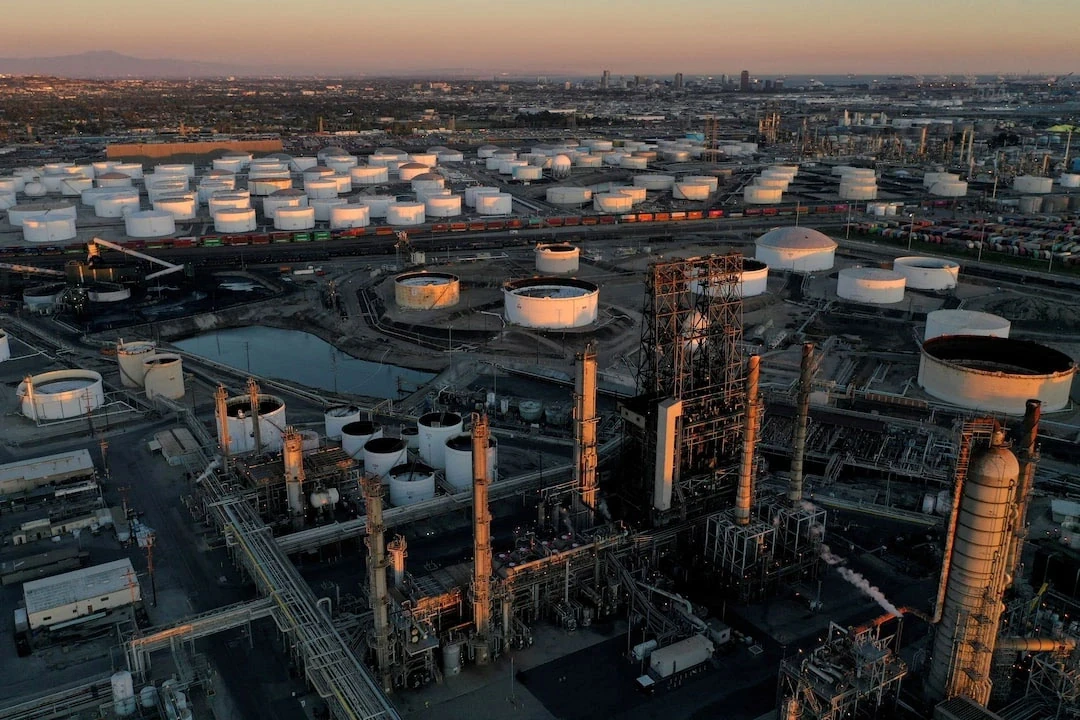
Oil prices jumped around 12% in early trading as military conflicts in the Middle East disrupted global energy markets. West Texas Intermediate (WTI) climbed to around $85.90 per barrel and gained more than $4.80. WTI crude oil is classified as light and sweet, with ‘light’ referring to its low density and ‘sweet’ indicating its low sulfur content. The delivery point for WTI crude oil futures is the Cushing Hub in Oklahoma, making it a key hub for U.S. and global oil markets. WTI is considered the world’s most liquid oil contract, serving as a benchmark for oil pricing. Murban crude, approached the $100.00 mark at $99.60 per barrel. U.S. crude rose to around $75 per barrel, while Brent crude reached $78.55 per barrel and reflected geopolitical uncertainty. The Strait of Hormuz, a passage for roughly 20% of the world’s oil supply, faces stability concerns that could substantially affect crude oil prices today. Analysts warn consumers may face gasoline price increases exceeding 25 cents per gallon. This piece gets into current oil prices, market reactions, expert forecasts and implications for domestic drilling operations.
Current Oil Prices Reflect Unprecedented Geopolitical Risk
Crude Oil Prices Chart Shows Sharp Monday Spike
Brent crude traded above $88.00 per barrel in early Friday trading, up more than 4% on the day and marked the sharpest weekly advance in about four years. West Texas Intermediate climbed to around $85.90 per barrel and gained more than $4.80. Murban crude, a key Middle Eastern standard for Asian buyers, approached the $100.00 mark at $99.60 per barrel.
Monday’s trading session showed extreme volatility among benchmarks. Brent futures jumped 13% to trade above $82.00 per barrel in the first minutes of open trading before paring back to $79.00. WTI moved up over 8% to around $72.00 per barrel. Natural gas markets experienced parallel disruptions. Europe’s standard gas price jumped 50% on Monday before closing 39% higher after QatarEnergy, one of the world’s largest exporters, halted production following military attacks on its facilities.
The surge in Murban prices signals that refiners in Asia, the market most exposed to Persian Gulf exports, face feedstock costs rising faster. The Strait of Hormuz, through which about 15 million barrels per day of crude and condensate cross daily, remains the focal point for supply concerns. That narrow waterway handles about a fifth of the world’s traded crude and is one of the most critical chokepoints in the global oil system.
How Military Conflicts Add Risk Premium to Energy Markets
Geopolitical risk premiums constitute a measurable component of crude oil pricing structures. These premiums range from 2-8% of total crude oil pricing in normal periods but can expand to 15-25% in acute crisis situations. Current market analysis suggests that geopolitical tensions account for around $3.00-5.00 per barrel of Brent crude pricing.
War risk insurance premiums provide quantifiable measures of how conflicts translate into energy costs. Maritime insurers adjust premiums for vessels transiting affected areas the moment tensions escalate in critical shipping corridors. Refineries see these costs transmitted directly into delivered crude oil prices. Insurance analysts report that owners are choosing not to transit rather than accept terms that make voyage economics unworkable.
Markets price elevated uncertainty through several mechanisms. Option volatility expands as traders calculate probability-weighted disruption scenarios. Forward curves distort and create steeper contango in near-term versus deferred contracts. Freight rates spike as shipping companies demand compensation for heightened risks. Prices could cross $100.00 per barrel if tanker flow is not restored faster.
Oil Prices Live Updates Show Continued Volatility
The Brent-WTI spread has compressed in recent trading sessions and defied typical geopolitical shock patterns. Brent traded about $8.00-$9.00 above WTI seven days ago, but that premium has since tightened to around $7.00 per barrel. Standard market reactions to Gulf tensions widen the Brent premium because Brent reflects seaborne crude traded around the world while WTI ties more closely to inland U.S. supply. This spread compression suggests traders are bidding up U.S. crude. There are early signs of shifting market sentiment and potential supply disruptions, as reflected in the narrowing spread and increased volatility.
The narrowing spread indicates buyers anticipate stronger demand for American export barrels if Middle East flows remain constrained and pull WTI higher relative to the global standard. Both benchmarks surged on overlapping supply concerns that included tangible oil production outages in Iraq and disruptions to seaborne crude shipments.
Gold picked up more than 3% to cross $5,400.00 per ounce as investors sought safe-haven assets, while the U.S. dollar appreciated by about 0.7%. Shares in Saudi Aramco rose by more than 3% in Middle Eastern trading sessions on the prospect of higher oil prices. The White House has explored options to limit economic fallout from rising oil prices and discussed potential measures to ease pressure on consumers if prices remain elevated.
Domestic is the best operating oil and gas exploration company located in the Dallas, TX
Interested In Working With Domestic operating?
Our News and Blog articles we write are here to keep you up to date in the Oil and Gas Industry
Why Global Markets Are Experiencing Divergent Reactions
Asian Economies Face Severe LNG Import Disruptions
LNG import disruptions intensify and create substantial industrial constraints for India. Indian gas marketing company GAIL weighed curbing supplies to natural gas customers after receiving a force majeure notice from long-term supplier Petronet LNG over vessel constraints. Gujarat Gas declared a force majeure to restrict gas supplies to industries starting Thursday. ONGC Petro Additions operates its Dahej gas cracker in western India at lower capacity due to falling gas and feedstock supplies.
India, the world’s fourth-largest LNG buyer, purchases about two-thirds of its supply from Qatar, the UAE, and Oman. The share of Middle Eastern oil in India’s crude imports rose to 55% in January, about 2.74 million barrels per day. Industrial impacts extend to multiple sectors. Lower gas supplies reduced production at Indian Farmers Fertilizer Cooperative Ltd and Kribhco Fertilizers Ltd. Small steel producers in Gujarat experienced gas supply cuts, while leading steelmakers maintain at least one month of inventory.
China holds a stronger position by comparison. The country purchased an average of 1.38 million barrels per day of Iranian oil last year, roughly 13% of all seaborne imports. Beijing maintains strategic reserves estimated at around 900 million barrels, just under three months of imports. Japan sources about 95% of its oil imports from the Middle East, with emergency oil reserves equivalent to 254 days of consumption. South Korea’s combined government and private sector stockpile covers about 208 days of consumption.
US Stock Indexes Climb Despite Energy Uncertainty
The S&P 500 rose 0.8% Wednesday and recovered most losses since the conflict began. The Dow Jones Industrial Average climbed 238 points, while the Nasdaq composite rallied 1.3%. Economic data showing U.S. businesses in real estate, finance, and services industries accelerated growth last month at the fastest pace since summer 2022 supported stocks.
Crypto-related stocks got stronger as bitcoin rebounded above $73,000. Coinbase Global jumped 14.6%, and Robinhood Markets rallied 8.1%. Retailers and travel companies gained on expectations that easing gasoline price jumps would preserve consumer spending power. Ross Stores climbed 8% after reporting better-than-expected quarterly results. Big Tech stocks provided the strongest market support, with Amazon rising 3.9% and Nvidia adding 1.7%.
European Markets Guide Through Supply Chain Concerns
Europe’s industrial sector confronts mounting pressure from rising energy costs and disrupted supply chains. Energy-intensive sectors including steel and paper struggle to maintain competitiveness against Asian and U.S. producers. European steel producers reduced output or shut down furnaces due to soaring gas and electricity prices.
European gas reserves reached 46 billion cubic meters at the end of February, compared with 60 billion cubic meters the previous year. The Iranian blockade of the Strait of Hormuz trapped more than 83 million tons of LNG shipments. About 20% of global LNG trade passes through the strait. Airlines Lufthansa and IAG declined by more than 6%.
Currency Markets Respond to Energy Price Shocks
Energy price shocks reshape currency relationships between commodity exporters and importers. Currencies of oil and gas exporting countries move in the same direction as energy prices, with the Canadian Dollar and Norwegian Krone getting stronger when oil prices increase. Countries relying heavily on energy imports, such as Japan and the Eurozone, see their trade balances deteriorate when energy prices rise and often experience currency depreciation.
The increment in energy costs causes inflation and prompts central banks to consider interest rate hikes to stabilize prices. This predicted tightening contributes to currency gains. The U.S. dollar appreciated by roughly 0.7% as global importers demanded more dollars to purchase crude oil.
Flight Cancelations Compound Economic Disruption
Over 3,000 Flights Canceled Across Middle East
Commercial aviation in the Middle East collapsed after U.S. and Israeli strikes on Iran. More than 2,400 flights were canceled on Sunday alone at regional airports. The disruption intensified faster, and 3,156 flights canceled on the second day of the conflict. FlightAware data captured nearly 3,000 total cancelations within the first 48 hours as airspace closures expanded.
The scale of disruption exceeded all regional conflicts in recent memory. Cirium analytics revealed that of 51,600 scheduled flights to or from the Middle East since February 28, more than half were canceled. The total reached about 21,300 canceled flights at seven major airports including Dubai, Doha and Abu Dhabi by March 3. Some estimates placed the cumulative cancelations at 27,000 flights since fighting began.
Airspace over Iran, Israel, Iraq, Qatar, Bahrain, Kuwait and Syria remained closed on Sunday. Partial closures affected the UAE and Saudi Arabia. Jordan suspended flights daily from mid-afternoon until 6 a.m. local time. Qatar Airways kept operations suspended due to Qatari airspace closure. The three major Gulf carriers—Emirates, Qatar Airways and Etihad—transport about 90,000 passengers per day through their hubs.
Dubai and Abu Dhabi Airports Suspend Operations
Dubai International Airport, which handled nearly 100 million passengers last year, sustained minor damage on Sunday after Iranian retaliatory attacks. The airport suspended all operations after an aerial interception that involved debris fall. Authorities confirmed no injuries were reported from the incident. Emirates suspended operations in and out of Dubai until 15:00 local time on Monday due to airspace closures.
Abu Dhabi’s Zayed International Airport faced direct attack. An Iranian drone strike resulted in at least one death and multiple injuries. Etihad Airways suspended all flights to and from Abu Dhabi until 1000 GMT on Tuesday. British Airways canceled services to Tel Aviv and Bahrain until Wednesday. Flights between Heathrow and Abu Dhabi, Amman, Bahrain, Doha, Dubai or Tel Aviv could be affected for several days.
Regional Travel Corridors Face Extended Closures
Paul Charles, CEO of luxury travel consultancy The PC Agency, characterized the shutdown as “the largest since the COVID pandemic”. The UAE civil aviation authority authorized 60 special repatriation flights in dedicated emergency air corridors and plans to operate more than 80 additional flights. Dubai International Airport dropped 85% of its scheduled flights since February 28, while Sharjah canceled around 90% of flights and Doha about 94%.
Tourism revenue losses could reach billions of dollars if the conflict continues. Airlines face higher fuel costs and complicated aircraft repositioning, as planes and crews scattered around the world. Airbus A380s operated by Etihad were located in London, Paris, Toronto and Singapore, with only four on the ground at Abu Dhabi.
Domestic is the best operating oil and gas exploration company located in the Dallas, TX
Interested In Working With Domestic operating?
Our News and Blog articles we write are here to keep you up to date in the Oil and Gas Industry
Oil Prices Forecast: What Analysts Predict Next
Short-Term Outlook Depends on Conflict Duration
Duration remains the determining factor in oil prices forecast models. Analysts warn that a prolonged disruption could send crude oil prices above USD 100.00 a barrel. Goldman Sachs warned that global oil prices could breach $100 a barrel within days due to supply disruptions. They also predicted that oil prices could reach $150 a barrel by the end of the month if supply disruptions continue. This would have a major effect on petrol prices, even in the U.S., where domestic production has tended to mute the effect of global price movements. Goldman Sachs Research estimates traders need about USD 14.00 more for a barrel of oil than they did before the conflict. This compensates for the increase in risks as of March 3. That risk premium roughly corresponds to their estimate of the effect of a full four-week halt in flows through the Strait of Hormuz.
Goldman Sachs Research projections range from USD 1.00 to USD 15.00 per barrel depending on closure extent. A full one-month closure without offsets could add USD 15.00 per barrel. A partial 25% closure with spare pipeline capacity used would add only USD 1.00. Morgan Stanley Research estimates that a 10% rise in oil prices from a supply shock could lift headline consumer prices in the U.S. by about 0.35% over the next three months.
US Navy May Provide Safe Passage for Tankers
President Trump announced the U.S. will provide insurance guarantees and naval escorts. These will ensure safe passage for oil tankers through the Strait of Hormuz. The U.S. International Development Finance Corporation would offer insurance at a very reasonable price. This helps ensure the flow of energy and other commercial trade in the Gulf. But Richard Meade, editor-in-chief of shipping journal Lloyds List, said it remained unclear if the US president would be able to address the safety concerns that drive the supply crunch.
Roughly 200 crude oil and product tankers are now stranded in the Gulf, according to data from Lloyds List Intelligence. Bob McNally, president of consultant Rapidan Energy Group and a former White House official, noted that full resumption of Hormuz flows will need weeks instead of hours or days. This assumes Tehran decides to continue fighting, even with the announced and helpful plans to provide insurance or escort ships.
Iran’s Export Capacity Faces Severe Constraints
Iran produced around 3.5 million barrels per day of crude oil and about 0.8 million barrels per day of condensate in 2025. Together these amount to about 4% of global oil supply. Iran’s 2025 exports averaged 1.7 million barrels per day for crude and condensates, 0.6 million barrels per day for refined products, and 0.4 million barrels per day for natural gas liquids. An Iranian official on Monday threatened to set fire to any ship trying to pass through the Strait of Hormuz. The Iranian military has reportedly fired on several vessels in the area.
China Seeks Alternative Supply Sources
China had 1.39 billion barrels of oil in storage as of March 2, according to Kayrros, a geospatial analytics company. This would cover 120 days of net crude oil imports at the 2025 level. There are also more than 46 million barrels of Iranian oil in floating storage in Asia and more in bonded storage in the ports of Dalian and Zhoushan, where the National Iranian Oil Company leases tanks. Saudi Arabia and the United Arab Emirates have the capacity to reroute a combined 5 million barrels per day to avoid the Strait of Hormuz. Some of that oil will likely flow to China.
Expert Analysis on Domestic Drilling and Operating Response
How US Energy Independence Affects Price Stability
The United States produced approximately 12.9 million barrels of crude oil per day in 2023, the highest annual average on record. This positions America as the world’s leading producer, pumping more than 13 million barrels daily. Energy independence does not eliminate vulnerability to global price shocks. Oil prices are set in international markets based on worldwide supply and demand. So disruptions thousands of miles away ripple through to American consumers whatever domestic production volumes.
But reduced import dependence provides measurable benefits. Net petroleum imports dropped from over 12 million barrels per day in 2005 to approximately 1.2 million barrels per day in 2022. This move protects the economy from the most severe supply disruptions and creates a more stable environment compared to major importers like India and China facing physical shortages.
What This Means for Best Oil and Gas Investments Dallas
Domestic Drilling and Operating specializes in oil and gas investments in Dallas. The company focuses on learning historically underexploited regions with known producible reserves and minimal current drilling activity. The Tax Reform Act of 1986 specifically exempts oil and gas working interests from passive income classification, and interested partners can contact Domestic Operating to discuss how this applies to their situation. Intangible drilling costs remain 100% tax deductible during the first year. The depletion allowance permits 15% of gross production revenue to be tax-free.
Strategic Petroleum Reserve Considerations
The Strategic Petroleum Reserve held approximately 394 million barrels at the end of 2024, down from the Biden administration’s historic 180 million barrel emergency release in 2022. President Trump’s February 2025 order prioritized refilling the SPR to its roughly 714 million barrel capacity. Filling requires acquiring approximately 379 million barrels.
Risk Management in Volatile Energy Markets
The recent surge in oil prices, driven by escalating tensions in the Middle East and the ongoing Iran war, has brought risk management to the forefront for both investors considering why oil and gas can be a strategic investment and energy companies. As crude oil futures and WTI crude oil futures experience sharp swings, market participants are reminded of the importance of robust strategies to navigate such volatility. The global market is increasingly sensitive to geopolitical developments, with the Middle East remaining a critical region for oil supply. In this environment, understanding how to manage exposure to price fluctuations is essential. Investors and companies are turning to a range of financial instruments and hedging techniques to protect their positions and ensure stability, even as the oil market reacts to every new headline from the region. The ability to anticipate and respond to sudden changes in crude oil prices is now a key differentiator for success in the energy sector.
Hedging Strategies for Oil and Gas Investors
For oil and gas investors, drawing on experienced oil and gas investment management, hedging is a vital tool to safeguard against unpredictable swings in oil prices. By leveraging crude oil futures and options, investors can lock in prices for future production or consumption, effectively shielding themselves from adverse market movements. For example, a producer might sell futures contracts to guarantee a minimum price for their crude oil output, while a refiner or large consumer could buy futures to cap their input costs. This approach not only helps manage exposure to price risk but also supports more accurate financial planning and budgeting. Leading financial institutions like Goldman Sachs play a pivotal role in advising clients on these strategies, especially during periods of heightened uncertainty such as the Iran war. Their expertise in analyzing the oil market and assessing the impact of geopolitical events enables investors to make informed decisions and mitigate the financial impact of sudden price shocks. As the conflict continues to influence crude oil prices, effective hedging remains a cornerstone of risk management for anyone with stakes in oil production, trading, or consumption.
How Companies Are Navigating Supply Chain Risks
The Iran war and the resulting instability in the Strait of Hormuz have exposed significant supply chain vulnerabilities for companies operating in the oil and gas sector, as illustrated by real-world drilling and production operations. With tankers delayed or rerouted and fears of further escalation disrupting established trade routes, businesses are rethinking their logistics and procurement strategies. Many are diversifying their supply sources, seeking alternative shipping lanes, and investing in more agile logistics networks to reduce dependence on any single region. In addition, companies are harnessing advanced data analytics and real-time trading insights to anticipate potential disruptions and adjust their operations proactively. This is particularly crucial for buyers in Asia and Europe, where reliance on Middle East oil is high and any interruption can have immediate consequences for production and pricing. By staying ahead of emerging risks and maintaining flexible supply chains, companies can better withstand the impact of geopolitical shocks and continue to meet market demand, even as the global market remains on edge due to ongoing conflict in the region.
Tools for Managing Price Fluctuations
To manage the unpredictable swings in crude oil prices, companies and investors have a suite of financial tools at their disposal, and many also rely on oil and gas investment FAQs covering risk, structure, and tax treatment. Crude oil futures and WTI crude oil futures are among the most widely used instruments, allowing participants to hedge against adverse price movements by locking in prices for future delivery. Options on these futures provide additional flexibility, enabling buyers to set maximum purchase prices or sellers to secure minimum sale prices, thus limiting their exposure to unfavorable market shifts. Swaps and forward contracts offer further customization, with settlement dates tailored to match specific operational or financial needs—whether the goal is to manage short-term volatility or secure long-term supply agreements. As global leaders like President Donald Trump respond to the complexities of the Iran war and issue demands such as unconditional surrender, the importance of these risk management tools becomes even more pronounced. By strategically employing futures, options, and other derivatives, market participants can mitigate the impact of price volatility, protect their margins, and maintain stability in an otherwise turbulent oil market.
Key Takeaways
Oil prices surged 12% as Middle East conflicts disrupted global energy markets, with Brent crude reaching $78.55 per barrel and analysts warning of potential $100+ prices if tensions persist.
• Strait of Hormuz closure threatens 20% of global oil supply, creating unprecedented geopolitical risk premiums of $3-5 per barrel in current pricing.
• Asian economies face severe disruptions with India cutting industrial gas supplies and over 21,000 flights canceled across Middle East airports.
• U.S. energy independence provides limited protection – despite producing 12.9 million barrels daily, Americans remain vulnerable to international price shocks.
• Duration determines market impact – Goldman Sachs estimates a full month-long Strait closure could add $15 per barrel, potentially pushing gas prices up 25+ cents per gallon.
• China maintains strategic advantage with 120 days of oil reserves in storage, while alternative supply routes through Saudi Arabia and UAE could partially offset disruptions.
• Each WTI futures contract represents 1,000 barrels of crude oil, providing a standardized way for market participants to hedge or speculate.
• WTI Crude Oil futures and options are the most efficient way to trade the largest light, sweet crude oil blend, offering liquidity and transparency.
• Over 1 million contracts of WTI futures and options trade daily, with approximately 4 million contracts of open interest, reflecting the market’s depth and activity.
• Futures leverage allows investors to control a large contract value with a small amount of capital, making it a powerful tool for managing exposure.
The crisis highlights how regional conflicts instantly impact global energy costs, making conflict duration the critical factor determining whether current price spikes represent temporary volatility or sustained market restructuring. Futures trading can help protect or enhance the value of oil-related assets by allowing participants to hedge against price swings or capitalize on market movements.
Conclusion
Middle East tensions continue reshaping global energy markets as crude oil prices reflect unprecedented geopolitical risk. The Strait of Hormuz closure threatens roughly 15 million barrels per day of crude flow and pushes analysts to forecast prices exceeding $100 per barrel under prolonged disruption scenarios. Asian economies face severe LNG shortages, while more than 21,000 flight cancelations compound economic damage across the region. U.S. energy independence offers partial insulation from supply shocks, though international price mechanisms ensure American consumers remain exposed to global volatility. In fact, the crisis underscores the interconnected nature of modern energy markets, where distant conflicts affect fuel costs worldwide immediately. Investors should monitor conflict duration, as this variable determines whether current price spikes represent temporary disruptions or sustained market restructuring.market restructuring.
Frequently Asked Questions (FAQs)
How much have oil prices increased due to Middle East tensions?
Oil prices jumped approximately 12% in early trading, with U.S. crude rising to around $75 per barrel and Brent crude reaching $78.55 per barrel. Some benchmarks like Murban crude approached $100 per barrel at $99.60, reflecting heightened geopolitical uncertainty in the region.
Why is the Strait of Hormuz so important for global oil supply?
The Strait of Hormuz is a critical chokepoint through which roughly 15 million barrels per day of crude oil and condensate pass daily, representing about 20% of the world's traded crude. Any disruption to this narrow waterway significantly impacts global energy markets and prices.
How are flight cancelations affecting the Middle East economy?
More than 21,000 flights were canceled across major Middle Eastern airports since the conflict began, with Dubai International Airport dropping 85% of scheduled flights. This represents the largest aviation shutdown since the COVID pandemic, potentially causing billions of dollars in tourism revenue losses.
Does U.S. energy independence protect Americans from global oil price increases?
While the U.S. produces approximately 12.9 million barrels of crude oil per day, making it the world's leading producer, Americans are not fully insulated from global price shocks. Oil prices are set in international markets based on worldwide supply and demand, so disruptions abroad still affect domestic fuel costs.
What are analysts predicting for future oil prices?
Analysts forecast that oil prices could exceed $100 per barrel if the conflict continues. Goldman Sachs estimates a risk premium of about $14 per barrel, with projections ranging from $1 to $15 per barrel depending on the extent and duration of supply disruptions through the Strait of Hormuz.