
Where Does Oil Come From?
Where Does Oil Come From?
Oil mainly comes from the ancient remains of marine microorganisms primarily algae and zooplankton as well as other organisms, including prehistoric plants and bacteria, that lived in the ocean millions of years ago. When these tiny organisms died, they sank to the seafloor and were buried by layers of sediment. Over tens of millions of years, heat and pressure transformed this organic matter into the hydrocarbons we now extract as crude oil and natural gas. Hydrocarbons are natural chemical compounds made up of hydrogen and carbon, and oil and gas are two types of hydrocarbons.
These newly formed hydrocarbons didn’t stay put. They migrated upward through tiny pores and fractures in rock layers until they encountered impermeable barriers dense cap rocks that trapped the oil and gas below. These accumulations became oil reservoirs, the underground deposits that energy companies drill into today. The process is slow, complex, and depends on specific geological conditions occurring in the right sequence.
Some theories suggest oil can form from deep inorganic processes unrelated to ancient life. While interesting scientifically, these ideas don’t explain the commercial oil fields we rely on. The overwhelming evidence including chemical signatures, biomarkers, and the association of oil with sedimentary basins confirms that petroleum products derive from biological origins. Petroleum is formed over millions of years from anaerobic decay of organic materials from buried prehistoric organisms, particularly plankton and algae.
In short, today’s crude oil is sunlight captured by microscopic life hundreds of millions of years ago, buried, baked, and stored in rocks beneath our feet.
This fossil fuel took nature millions of years to create, yet humanity has consumed significant portions of accessible reserves in just over a century.
Introduction to Fossil Fuels
Fossil fuels—crude oil, natural gas, and coal are the backbone of the world’s energy system, powering everything from transportation and electricity to manufacturing and daily conveniences that define modern life. These energy-rich resources are the result of a remarkable transformation: over millions of years, organic material such as ancient plants, algae, and other organisms became buried within layers of sedimentary rocks. Under immense pressure and high temperatures deep beneath the earth’s surface, this organic matter gradually converted into carbon-rich compounds known as hydrocarbons.
Crude oil, in particular, plays a central role in global energy consumption. Oil production is a complex process that begins with the identification of oil reservoirs porous rock formations where oil accumulates in tiny spaces and pores. Geologists use advanced techniques, including seismic surveys and drilling, to locate these reservoirs and assess their potential. Oil producing countries, especially those in the Middle East, Canada, and the United States, are key players in meeting the world’s ever-growing demand for energy. Oil sands, found in places like Alberta, Canada, represent another significant source of crude oil, requiring specialized extraction methods to produce oil from these dense mixtures of sand, clay, water, and bitumen.
The global oil market is shaped by a variety of factors, including oil prices, production levels, and geopolitical events. Organizations like the Energy Information Administration (EIA) provide critical data on oil production, consumption, and reserves, helping governments and businesses navigate the complexities of supply and demand. Oil prices can fluctuate dramatically in response to changes in production, shifts in demand, or disruptions in major oil producing countries, as seen when OPEC+ signals a supply increase and triggers price plunges.
However, the extraction and use of fossil fuels come with significant environmental and social challenges. Burning crude oil and other hydrocarbons releases carbon dioxide and other greenhouse gases, contributing to climate change and air pollution. Oil production, especially from unconventional sources like oil sands and shale, can impact land, water, and even marine environments, sometimes leading to habitat loss or contamination. The process of drilling and extraction can also affect local communities and ecosystems, raising concerns about sustainable land use and environmental stewardship.
In response to these challenges, there is a growing movement to reduce reliance on fossil fuels and transition toward cleaner, more sustainable sources of energy. Advances in technology such as improved drilling methods for shale oil and more efficient extraction from oil sands have helped increase production and lower costs, but they also highlight the need for responsible management of environmental impacts. Investments in renewable energy, improvements in energy efficiency, and stricter regulations are all part of the global effort to balance energy needs with environmental protection.
Ultimately, fossil fuels like crude oil, natural gas, and coal have fueled economic growth and shaped the modern world, but their continued use requires careful consideration of both their benefits and their costs. As the world looks to the future, developing strategies to reduce the environmental footprint of energy production and consumption will be essential for a sustainable and prosperous society.
What Is Crude Oil and Why Is It Called “Black Gold”?
Crude oil is a naturally occurring liquid mixture of hydrocarbons and other organic compounds found in geological formations deep beneath the earth’s surface. It forms when ancient organic material undergoes chemical transformation under specific conditions of heat and pressure over geologic time.
The term “crude” refers to its unrefined state oil comes out of the ground as a raw mixture that must be processed at a refinery before becoming useful fuel and chemicals. A single barrel of crude yields dozens of petroleum products through a process called fractional distillation, which separates the mixture based on the boiling points of its components.
The nickname “black gold” reflects oil’s extraordinary economic value. Since the mid-20th century, petroleum has been the world’s primary energy source, driving transportation, manufacturing, and electricity generation. Oil prices influence everything from consumer goods to international relations, making it one of the most strategically important commodities on the planet.
Crude oil isn’t always black. Depending on its composition, it ranges from light brown to greenish to nearly black, and from thin and watery to thick and tar-like. Lighter crudes are typically more valuable because they yield more gasoline and diesel, while heavier crudes require more intensive processing.
Common products derived from crude oil:
Gasoline, diesel, and jet fuel for transportation
Plastics and synthetic fibers used in packaging, clothing, and electronics
Lubricants and motor oils for machinery and vehicles
Fertilizers and pesticides for agriculture
Pharmaceutical ingredients and medical supplies
Asphalt for road construction
How Did Earth’s Oil Form Over Millions of Years?
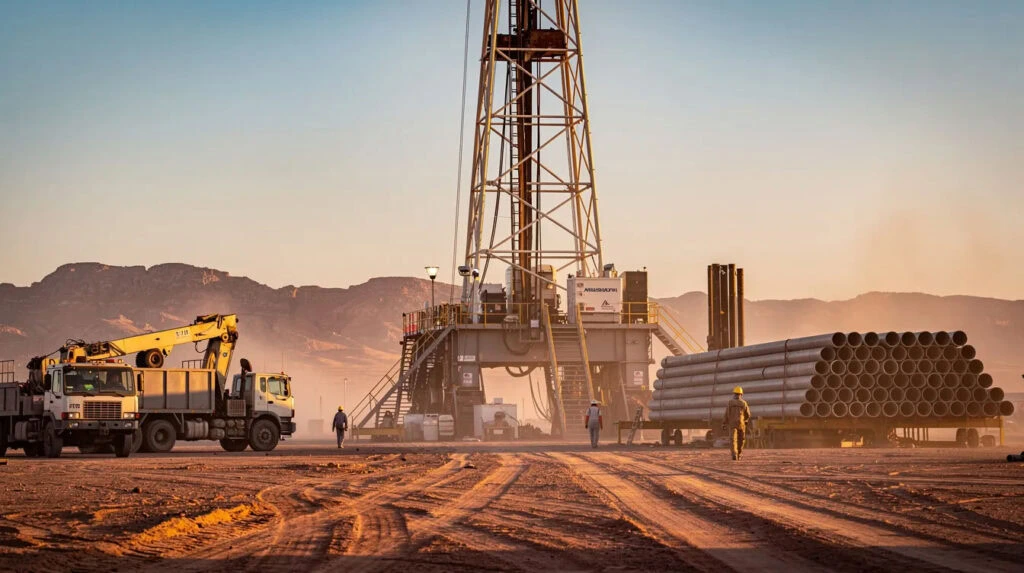
Contrary to popular belief, oil did not come from dinosaurs. The primary source was far smaller: ancient marine microorganisms like algae, plankton, and bacteria that flourished in warm, shallow seas. In addition to these, other organisms such as prehistoric plants and bacteria also contributed to the formation of oil. Most of the world’s oil formed during the Mesozoic era, roughly 252 to 66 million years ago, though significant deposits also trace back to older periods. While oil and natural gas primarily originate from marine microorganisms and other organisms, coal is another fossil fuel formed mainly from ancient plant material, highlighting a key difference in source material. The process that created these reserves unfolded in four main stages.
The first stage involved organic matter deposition. In ancient oceans and lakes, countless microscopic organisms lived, died, and sank to the seafloor. Under normal conditions, this organic material would decompose and return its carbon to the environment. But in certain low-oxygen environments like stagnant sea basins and deep lake bottoms decomposition was incomplete. The remains accumulated in thick layers of mud and sand, forming what geologists call source rocks. These organic-rich sedimentary rocks, often black shales, contained the raw materials for future oil.
The second stage brought burial, heat, and high pressure. As millions of years passed, additional layers of sediment piled on top, burying the source rocks deeper underground. Increasing depth meant rising temperatures and pressures. The critical range, often called the “oil window,” typically occurs between 60°C and 120°C. Within this window, the organic material begins transforming into liquid hydrocarbons. The enormous pressure, high temperatures, and lack of oxygen transformed the organic matter into a waxy substance called kerogen. At higher temperatures, the process favors natural gas production instead, while lower temperatures leave the organic matter largely unchanged.
The third stage involved the transformation of kerogen to hydrocarbons. Kerogen is the waxy, solid organic material embedded in source rocks the intermediate step between dead organisms and liquid oil. Over millions of years, sustained heat and pressure cracked these complex molecules into simpler hydrocarbons. The result was a mixture of crude oil and natural gas, along with other hydrocarbons of varying weights and properties.
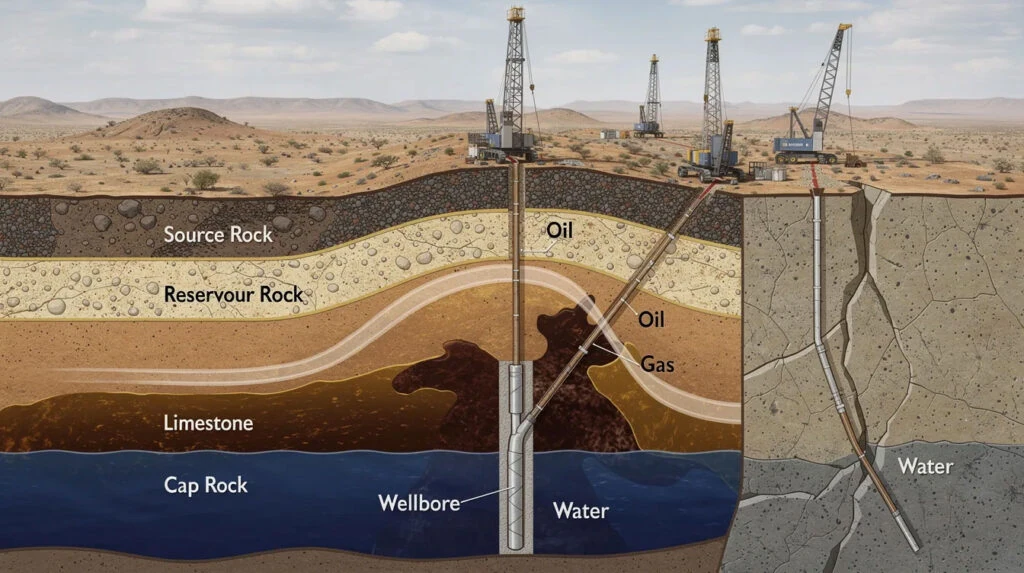
The fourth stage was migration and trapping. Newly formed oil and gas didn’t remain in the source rocks. Being lighter than water, these fluids migrated upward through tiny spaces and fractures in overlying rock layers. This journey continued until the hydrocarbons encountered an impermeable “seal” rock a dense layer like shale or salt that blocked further movement. Oil and gas accumulated beneath these barriers in porous reservoir rocks, forming the underground deposits we drill today.
Variations in this process explain why different basins produce different types of petroleum. Higher temperatures yield more natural gas. Lower temperatures or incomplete burial may leave behind heavy bitumen, like that found in Canadian oil sands. The original composition of the organic material, the specific burial history, and the local geology all influence whether a region is rich in light sweet crude, heavy sour crude, or predominantly gas.
Most of the world’s current oil reserves were formed during three main eras: Mesozoic (70%), Cenozoic (20%), and Paleozoic (10%).
How Do Geologists Find Underground Oil?
In ancient times, people discovered oil through visible seeps places where petroleum naturally reached the earth’s surface. These seeps, like the famous ones in Trinidad and the Middle East, hinted at reserves below. Today, finding commercially viable oil fields requires sophisticated geology and geophysics to minimize the substantial risks and costs of drilling.
Geologists begin by building a regional picture of the subsurface. They study surface rocks, analyze geological maps, and reconstruct the history of ancient seas and river deltas. Sedimentary basins areas where thick sequences of sediment accumulated over time are the primary targets. Well-known examples include the Gulf of Mexico, the North Sea, the Permian Basin in Texas, and vast areas beneath the Middle East. These regions have the right combination of source rocks, reservoir rocks, and seal rocks to trap hydrocarbons.
Seismic surveys are the workhorse of modern exploration. On land, specialized trucks equipped with vibrating plates or explosive charges send sound waves into the ground. At sea, ships tow arrays of air guns that produce acoustic pulses. Sensors record the echoes as these waves bounce off different rock layers. Computers process this data into 2D and 3D images that reveal the subsurface structure, showing potential traps where oil might accumulate.
Additional tools refine the picture. Gravity measurements detect density variations in rock formations. Magnetic surveys identify certain mineral compositions. Satellite imagery reveals surface features that hint at subsurface geology. Engineers also analyze data from existing wells rock cuttings, fluid samples, and well logs to understand how formations behave across a region.
Once a promising structure is identified, companies drill an exploratory well. This initial probe collects rock samples and measures pressure, temperature, and fluid flow. If the well confirms commercial quantities of oil, additional development wells follow. GPS and precision positioning systems ensure drilling locations are accurate to within meters, whether on land or at sea where platforms and drilling ships operate over exact coordinates.
From Shallow Pools to Deep Wells: Where Is Oil Located and How Deep Is It?
A common misconception imagines oil existing in vast underground lakes or caverns. In reality, oil saturates the tiny pores and fractures within sedimentary rocks like sandstones and carbonates. These rocks act as reservoirs, holding oil the way a sponge holds water. The natural pressure from surrounding rocks and fluids often helps push oil toward wells, though this pressure declines over time.
Conventional onshore oil fields typically lie a few thousand feet below the surface. Many productive wells reach depths between 3,000 and 8,000 feet (roughly 1 to 2.5 kilometers). In the United States, the average depth of oil wells has increased significantly over time—from about 3,500 feet in the late 1940s to around 6,000 feet by the late 2000s. This trend reflects a simple reality: shallower, easier-to-access fields were developed first, and the industry has progressively moved to deeper, more challenging targets.
Extreme depths are increasingly common. The world’s deepest oil and gas wells exceed 40,000 feet (about 12 kilometers) of measured depth. This total includes not just vertical drilling but also horizontal sections that extend laterally through thin productive layers. In tight shale formations, wells may drop vertically for a mile or two, then turn horizontal for another mile or more, following the pay zone through rock that would otherwise be unproductive.
Offshore drilling adds another dimension of complexity. In the Gulf of Mexico and off the coasts of Brazil and West Africa, wells are drilled in water depths exceeding 5,000 feet before continuing several kilometers below the seabed. Brazil’s pre-salt fields, located beneath thick salt layers, require drilling through water, seafloor sediments, and massive salt deposits to reach reservoirs that formed over 100 million years ago.
Understanding the difference between vertical depth (straight down from the surface) and total measured depth (the actual length of the wellbore, including horizontal legs) matters for grasping modern extraction. A well might be only 10,000 feet deep vertically but have a measured depth of 25,000 feet due to its extended horizontal reach.
Testimonials
Read What Real Investors Say about Domestic Drilling & Operating
Here are some reviews from our clients about our turnkey Oil and Gas Investment Opportunities and their outcomes.
4.9/5 Rating
Request More Information
"*" indicates required fields
Where in the World Does Most Oil Come From?
The question “where does oil come from” has two answers. Geologically, oil traces back to ancient seas and lakes where organic material accumulated. Geopolitically, it comes from specific oil producing countries whose reserves and production capacity shape global energy markets. Each country’s influence on the global oil market depends on its reserves, production levels, and geopolitical significance, especially as organizations like OPEC warn of a massive crude oil investment gap in meeting future demand.
The top oil producers shift somewhat from year to year, but a few nations consistently dominate. The United States has become the world’s largest producer, driven by tight oil extraction from formations like the Permian Basin and Bakken Shale. Saudi Arabia remains central to global supply, possessing more than 267 billion barrels of oil reserves the second largest in the world and some of the lowest production costs. Russia ranks among the top three producers, with vast reserves in Siberia. Canada has the fourth largest oil reserves globally, with 163 billion barrels, primarily from oil sands. Iraq, with about 145 billion barrels of reserves, has rebuilt its oil production substantially and holds major reserves in the Middle East. Iran ranks third in oil reserves, holding approximately 208 billion barrels. The United Arab Emirates also holds significant reserves, with about 113 billion barrels. These countries, along with other countries such as Kuwait and Venezuela, play a crucial role in global oil dynamics.
Together, the top five oil producing countries the United States, Russia, Saudi Arabia, Canada, and Iraq supply more than half of global oil production, making their output critical to meeting worldwide demand. The rise in oil production and demand over the past decades has been driven by technological advances, economic growth, and geopolitical factors.
Proven reserves oil that can be extracted profitably with current technology are distributed unevenly:
Venezuela holds the world’s largest proven reserves, though much of it is heavy crude requiring intensive processing
Saudi Arabia has the second largest reserves, with over 267 billion barrels
Iran ranks third with approximately 208 billion barrels
Canada is fourth with 163 billion barrels, largely due to oil sands in Alberta, an unconventional resource requiring different extraction methods
Iraq has about 145 billion barrels, making it one of the top five countries in terms of oil reserves
The United Arab Emirates holds approximately 113 billion barrels
Other countries such as Kuwait and Russia also possess substantial conventional reserves
About 80 percent of the world’s readily accessible oil reserves are located in the Middle East, making this region especially significant in global energy markets.
The Organization of the Petroleum Exporting Countries (OPEC) plays a major role in the global oil market. OPEC nations control about 38 percent of global oil production and hold approximately 79.5 percent of the world’s proven oil reserves. The influence of OPEC and its member countries shapes oil prices and supply, impacting both producing and consuming nations.
The Strait of Hormuz, a narrow waterway between Iran and the Arabian Peninsula, serves as a critical chokepoint for global oil trade. Around 20 million barrels per day are expected to pass through it in 2025, representing a significant portion of global oil shipments. Roughly 20% of the world’s oil consumption passes through this strait, including exports from Iraq, Kuwait, Qatar, and Bahrain. Any disruption there sends oil prices spiking and affects consumption patterns globally. Geopolitical conflicts often arise due to the control and access to oil resources, and the global oil market is heavily influenced by geopolitical tensions, particularly in oil-rich regions like the Middle East.
Major importing nations particularly China, India, Japan, and South Korea depend heavily on seaborne oil shipments. Their economies remain sensitive to supply disruptions and price volatility. Meanwhile, the rise of renewable energy and climate change mitigation efforts are expected to shift the geopolitical landscape away from oil-dependent nations. The transition to cleaner energy systems is being driven by the need to reduce exposure to geopolitical risks associated with oil trade routes. Shifts toward renewable energy and improved efficiency are gradually changing which regions and resources will supply the world’s future energy needs, though petroleum remains central to the global economy today, continuing to attract interest from those seeking experience-backed oil and gas investments.
Conventional, Unconventional, and “Tight” Oil: Does It All Come from the Same Place?
The terms “conventional” and “unconventional” describe how oil is trapped and produced, not fundamentally different origins. Both types begin with organic-rich source rocks formed in ancient marine environments, where organic matter accumulated and was buried. These processes occurred in settings such as oceans and seas, which are examples of marine environments. Today, oil extraction and related activities can impact the marine environment through spills and pollution, threatening marine ecosystems. Both conventional and unconventional oil undergo the same transformation process and yield similar hydrocarbons. The distinction lies in the geology of the reservoir and the techniques required for extraction, whether in offshore basins or Texas oil formations such as the Eagle Ford and Permian Basin.
Conventional oil accumulates in porous, permeable rocks where natural pressure allows it to flow relatively easily into wells. Think of water flowing through gravel the spaces between grains are large enough and connected enough that fluids move freely. Conventional reservoirs typically require standard drilling and allow oil to flow without extensive stimulation. Most historical oil production has come from conventional fields, which remain important but are increasingly mature.
Unconventional resources require advanced techniques because the oil is trapped differently. This category includes:
Tight oil (often called shale oil) locked in rocks with very low permeability sandstones, limestones, and shales where tiny spaces are poorly connected
Oil sands containing heavy bitumen mixed with sand, clay, and water
Extra-heavy oil that doesn’t flow at reservoir conditions
Tight oil has driven much recent growth in U.S. oil production. Formations like the Bakken in North Dakota and the Eagle Ford and Permian Basin in Texas contain substantial oil, but extracting it requires horizontal drilling and hydraulic fracturing. These techniques create artificial fractures in the rock, providing pathways for oil to flow toward the wellbore, even as U.S. shale oil breakeven costs trend toward higher levels.
Oil sands present a different challenge. Found primarily in northern Alberta, Canada, these deposits contain bitumen so thick it cannot flow without heating. Extraction involves either surface mining scooping up the mixture with massive equipment or in-situ methods that inject steam underground to soften the bitumen so it can be pumped to the surface. The process is energy-intensive and produces a heavy product requiring significant processing at specialized refineries.
Despite their physical differences, all these resources share the same fundamental origin: ancient organic material transformed by heat and pressure over geologic time, then trapped in various geological configurations.
Oil Production and Refining: From Wellhead to Usable Fuel
Estimating remaining oil reserves involves more uncertainty than most people realize. The answer depends on technology, economic conditions, and definitions of what counts as “recoverable.” Geological endowment the total amount of oil that exists underground far exceeds what can be economically extracted at any given time.
Proved reserves represent quantities of oil that geological and engineering data demonstrate can be extracted profitably under current conditions. According to the Energy Information Administration and similar agencies, global proved reserves could sustain current production levels for several decades. However, this figure changes constantly as:
New discoveries add to reserves
Improved technology makes previously unrecoverable oil accessible
Price changes alter what’s economically viable
Consumption patterns shift with demand
Production from oil fields doesn’t stop abruptly. Instead, output declines gradually as natural pressure in reservoirs drops and remaining oil becomes harder to extract. Mature fields often continue producing for decades at diminishing rates. To maintain or grow total production, companies must continuously find and develop new resources a process that increasingly leads to deeper, more remote, or more technically challenging deposits.
The transition from “easy oil” to harder-to-produce resources carries consequences:
Higher costs as extraction becomes more complex
More energy-intensive production, with oil sands and tight oil requiring substantial energy inputs
Greater environmental impacts unless offset by technological improvements and stronger regulations
Increased carbon dioxide emissions from both extraction and processing
These realities have accelerated investment in alternatives. Electric vehicles reduce gasoline consumption in transportation. Renewable energy sources displace oil in electricity generation (though oil’s role there is already limited). Efficiency improvements mean more economic output per barrel consumed. Some analysts project that oil demand could peak within the coming decades, though timing remains highly uncertain, making it vital to understand what changing energy policies mean for long-term investments.
What’s clear is that finite resources require thoughtful management. The oil that took millions of years to form has been extracted at extraordinary rates over the past century. Whether through gradual depletion of accessible reserves or deliberate transitions to cleaner energy, the petroleum era will eventually give way to something new.
The Environmental Impact of Oil: From Extraction to Use
The environmental impact of oil stretches from the moment crude oil is extracted from deep oil reservoirs to the final use of petroleum products in our daily lives. Oil production, whether from conventional wells or unconventional sources like oil sands, can have profound effects on the earth’s surface and the surrounding ecosystems.
One of the most visible risks is oil spills, which can occur during extraction, transportation, or storage. When oil escapes into the marine environment, it can devastate marine life, contaminate coastlines, and disrupt entire ecosystems. The process of extracting oil from oil sands is particularly energy-intensive, requiring large amounts of water and generating significant waste. According to the Energy Information Administration, oil sands production emits more greenhouse gases per barrel than conventional oil extraction, largely due to the extra energy needed to separate bitumen from sand and upgrade it into a usable liquid form.
Refining crude oil into usable petroleum products also releases pollutants. The process emits carbon dioxide a major greenhouse gas along with other chemicals that contribute to air and water pollution. Burning fossil fuels like gasoline and diesel in vehicles and power plants further increases carbon dioxide emissions, driving climate change and impacting air quality in cities around the world.
Beyond emissions, oil extraction can alter landscapes, disrupt habitats, and pollute water sources. Chemicals used in drilling and production can seep into soil and groundwater, while flaring and venting of natural gas during oil production add to atmospheric pollution. Oil sands operations, in particular, can leave behind large tailings ponds and disturbed land that require extensive reclamation efforts.
To address these challenges, many oil producing countries and companies are investing in cleaner technologies, stricter regulations, and more efficient production methods. There is also a growing push to transition toward renewable energy sources and improve energy efficiency, reducing reliance on petroleum and minimizing the environmental footprint of energy production. As the world continues to use oil, balancing the benefits of petroleum products with the need to protect the environment remains a critical challenge for the future, especially as new regulatory changes reshape the oil and gas industry for investors.
Why the World Runs on Oil: Consumption and Demand Explained
Oil remains the backbone of modern life, powering everything from cars and airplanes to factories and homes. Its dominance is due to its high energy density, versatility, and the wide range of petroleum products it yields such as gasoline, diesel, jet fuel, and countless chemicals essential to daily living. The ability to produce oil efficiently and transport it across the globe has made it indispensable for economic growth and development.
The demand for oil is driven by a combination of factors. Rapid population growth, urbanization, and industrialization especially in emerging economies have led to a surge in energy consumption. Countries in the Middle East and other major oil producing countries play a pivotal role in meeting this demand, supplying the world with the crude oil needed to produce fuel and other vital products. According to the Energy Information Administration, global oil consumption is expected to keep rising, with the largest increases projected in developing nations like China and India, where expanding middle classes and infrastructure projects fuel greater energy needs.
Technological advances in extraction, such as hydraulic fracturing and horizontal drilling, have unlocked new reserves and boosted oil production in countries like the United States. This has helped meet growing demand but has also raised concerns about the environmental impact of these methods. Meanwhile, oil prices remain sensitive to shifts in production, geopolitical tensions, and changes in global consumption patterns, a reality often reflected in industry news, project galleries, and market updates for oil and gas developments.
As the world’s appetite for energy continues to grow, the challenge is to balance the benefits of oil with the need for sustainability. Efforts to improve energy efficiency, invest in renewable sources, and develop cleaner extraction technologies are crucial for reducing the environmental impact of oil production and consumption. Ultimately, while oil will remain a key part of the world’s energy mix for years to come, the way we produce, use, and manage this vital resource will shape the future of energy and the health of our planet.
Key Takeaways
Understanding where oil comes from connects everyday energy use to deep geological history:
Oil formed from ancient marine microorganisms buried and transformed over millions of years
Heat and pressure converted organic material into hydrocarbons that migrated into underground reservoirs
Geologists use seismic surveys and advanced technology to locate oil deposits beneath the surface
Major oil producing countries like the United States, Saudi Arabia, and Russia supply most global production
Conventional and unconventional oil share the same origins but differ in extraction requirements
Remaining reserves depend on technology, economics, and evolving demand patterns
The next time you encounter petroleum products from the gasoline in your tank to the plastics in your home consider the remarkable journey that brought ancient sunlight, captured by microscopic ocean life, through rock layers to fuel modern life.
How Oil Travels the Globe: Pipelines, Tankers, and International Trade
Once crude oil is extracted from deep beneath the earth’s surface, its journey is far from over. To reach refineries and ultimately consumers around the world, oil must travel vast distances often crossing continents and oceans. This global movement of oil is made possible by a sophisticated network of pipelines, massive tanker ships, and, for shorter routes, trucks and trains.
Pipelines are the backbone of oil transportation in many oil producing countries. Stretching for thousands of miles, these underground or above-ground pipelines efficiently move crude oil from production sites to refineries and export terminals. Countries in the Middle East, such as Iraq, Saudi Arabia, and the United Arab Emirates, rely heavily on extensive pipeline networks to transport oil both within their borders and to neighboring regions. Pipelines are prized for their ability to move large volumes of oil safely and continuously, but they are not without risks—leaks or ruptures can have serious environmental and economic consequences.
For oil that needs to cross seas and oceans, tankers are essential. These enormous ships, some capable of carrying over two million barrels of crude oil at a time, connect oil producing countries in the Middle East and other regions to markets in Asia, Europe, and the Americas. The Strait of Hormuz, located near Iraq and other Gulf states, is one of the world’s most critical oil transit chokepoints, with millions of barrels passing through daily. Tankers make it possible for oil to reach countries that lack direct pipeline connections, supporting the global oil trade and ensuring a steady supply of petroleum products worldwide.
In addition to pipelines and tankers, trucks and trains play a vital role in moving crude oil over shorter distances, especially in areas where pipeline infrastructure is limited or where oil needs to be delivered to specific refineries or storage facilities. The choice of transportation method depends on factors such as distance, geography, the type of crude oil, and the availability of infrastructure.
The process of transporting oil is a testament to the interconnectedness of the modern world. Oil produced in the deserts of the Middle East or the oil fields of Iraq can end up fueling cars in Europe, powering factories in Asia, or heating homes in North America. This global network ensures that crude oil and its derivatives remain accessible, but it also highlights the importance of secure, efficient, and environmentally responsible transportation systems in the world’s energy landscape.
What’s Next for Oil? The Future Outlook
As modern life continues to evolve and the world’s population grows, the demand for energy and for crude oil in particular remains a central concern. According to the Energy Information Administration, global oil consumption is expected to keep rising, driven by expanding economies and increasing energy needs in developing regions. Oil producing countries are working to meet this demand by investing in new technologies and exploring untapped reserves, often found in sedimentary rocks with tiny pores that require advanced extraction techniques, similar to strategies used in best-in-class oil and gas investments in Dallas-focused projects.
The future of oil production is being shaped by several key trends. Advances in drilling and extraction, such as hydraulic fracturing and enhanced recovery methods, allow producers to access oil trapped in shale and other challenging formations. These methods use high pressure and high temperatures to release oil from tiny spaces within rock layers, unlocking resources that were once considered unreachable. As a result, countries like the United States have seen a significant rise in oil production, helping to stabilize global supply and influence oil prices.
However, the outlook for oil is not without challenges. Growing awareness of the environmental impacts of fossil fuel consumption including carbon dioxide emissions, climate change, and habitat disruption is prompting governments and industries to seek cleaner alternatives. Investments in renewable energy sources, such as solar and wind, are increasing, and improvements in energy efficiency are helping to reduce overall consumption. The rise of electric vehicles and alternative transportation technologies is also expected to decrease demand for gasoline and other petroleum products over time.
Despite these shifts, crude oil and petroleum products are likely to remain essential to the world’s energy mix for years to come. Oil producing countries will continue to play a pivotal role in meeting global demand, but they must also adapt to changing market dynamics, regulatory pressures, and technological innovations. The ability to produce oil efficiently from challenging reservoirs using high pressure, high temperatures, and advanced extraction methods will be crucial for maintaining production levels as easily accessible reserves decline, underscoring the value of experienced executive teams leading modern drilling and operating companies.
In summary, the future of oil is complex and dynamic. While demand for energy and petroleum products will persist, the industry faces a period of transformation driven by environmental concerns, technological progress, and evolving patterns of consumption. How oil producing countries and companies respond to these challenges will shape not only the future of oil production, but also the broader trajectory of global energy and modern life.
Frequently Asked Questions (FAQs)
Where does oil come from?
Oil originates from the ancient remains of marine microorganisms such as algae and zooplankton that lived millions of years ago. These organisms were buried under sediment and transformed by heat and pressure into hydrocarbons.
How is crude oil formed?
Crude oil forms through a process where organic material buried in sedimentary rocks undergoes chemical changes under heat and pressure over millions of years, turning into liquid hydrocarbons trapped in underground reservoirs.
What is the difference between conventional and unconventional oil?
Conventional oil is found in porous rock formations where it flows naturally under pressure, while unconventional oil, such as tight oil and oil sands, is trapped in less permeable rocks and requires advanced extraction techniques like hydraulic fracturing or steam injection.
How do geologists find oil underground?
Geologists use seismic surveys, geological mapping, and other geophysical tools to locate potential oil reservoirs. Exploratory wells are drilled to confirm the presence of commercially viable oil deposits.
How deep underground is oil typically found?
Oil reservoirs are usually located thousands of feet below the earth’s surface, often between 3,000 and 8,000 feet deep, but some wells reach depths exceeding 40,000 feet, especially with modern horizontal drilling techniques.
What happens when easy-to-extract oil runs out?
As easy oil reserves deplete, oil production shifts to more difficult, deeper, or unconventional sources, which are more costly and energy-intensive to extract. This transition impacts oil prices, production methods, and environmental considerations.
Domestic Drilling & Operating News
Get The Latest From Our Oil and Gas News
Read and update the latest news from us, we have lots of the latest news about the oil and gas investing product.

Check out our other blog articles for recent news.