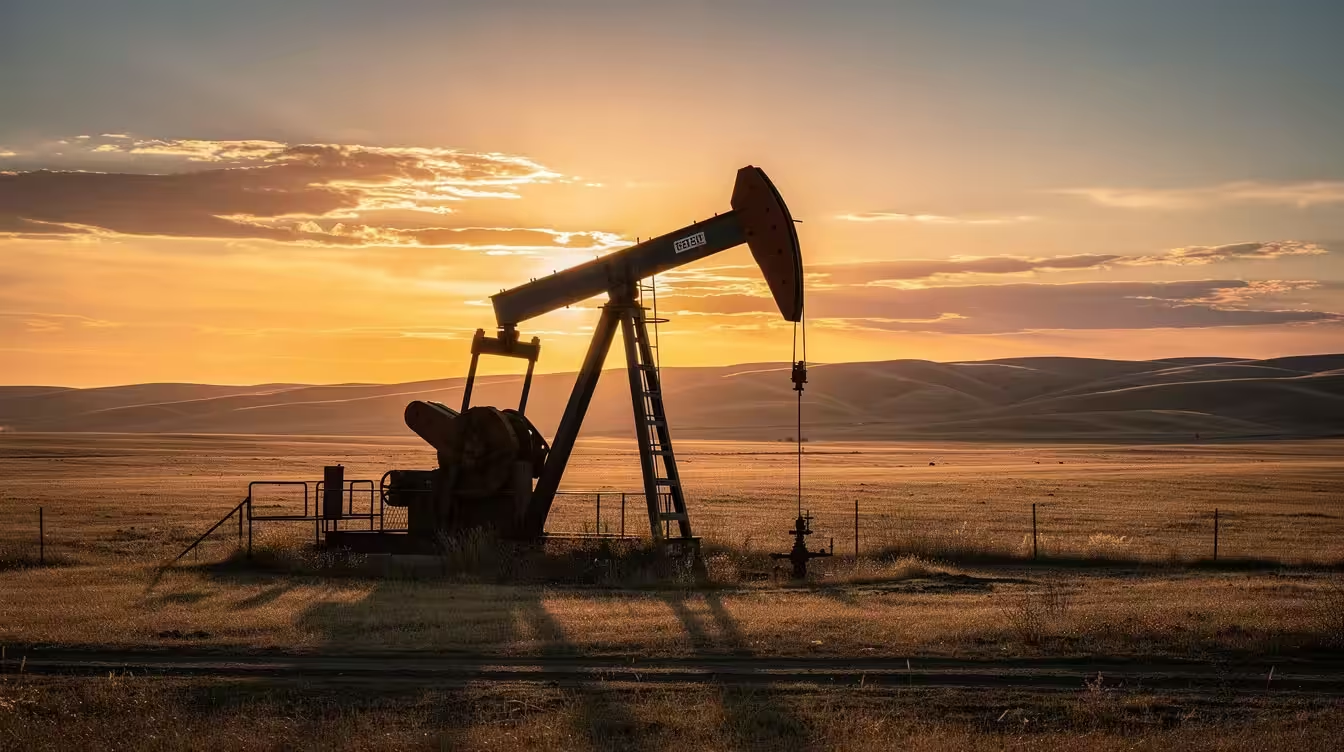
Buyers can browse oil wells for sale across key U.S. basins right now, from the Eagle Ford in South Texas to prolific counties in Oklahoma, Pennsylvania, and Texas. Whether you’re an experienced operator or a first-time investor, the opportunity to acquire producing and non-producing assets has never been more accessible.
This guide walks you through exactly how to find, evaluate, and close on profitable oil and gas properties.
Key Takeaways
- Oil wells for sale span every deal size, from sub-$10,000 royalty interests to multi-million-dollar lease packages across active basins in Texas, Oklahoma, Kansas, Arkansas, and Pennsylvania.
- Successful buyers evaluate production history, reserves, lease terms, and operating costs before making offers. Due diligence is essential before purchasing oil and gas assets.
- Both operated and non-operated working interests, mineral rights, and natural gas wells are available, with listings frequently offered “on request” through confidential data rooms.
- Oil and gas investments can help diversify an investment portfolio and provide direct commodity exposure for accredited investors.
- The marketplace is designed for quick contact with sellers, fast NDAs, and streamlined closing timelines for serious, financially qualified buyers who are ready to move.
Oil and Natural Gas Wells for Sale in Active U.S. Basins
This platform serves as a nationwide marketplace for oil and gas wells for sale, connecting buyers and sellers across the most productive basins and counties in the country. Unlike generic listing sites, every asset listed here is tied to a specific basin, county, and production profile.
Available properties include producing wells, shut-in wells, complete lease packages, and leasehold positions in major plays such as Eagle Ford (South Texas), the Permian Basin, the Anadarko Basin, and the Mid-Continent region. Typical deal sizes range from $10,000 for a single well or small royalty interest up to $5,000,000 or more for multi-well field packages.
A typical listing might read: “5–10 BOPD from 3 wells with 100% WI / 80% NRI, all equipment included, price on request.” Listings frequently include oil gas combination assets and dedicated natural gas wells, covering both conventional vertical wells and horizontal shale wells. Specialized auction sites and online platforms are commonly used for buying and selling producing wells, mineral rights, and royalty interests. Investing in oil wells provides direct commodity exposure for accredited investors who want to go beyond stocks and ETFs, and many buyers view domestic oil and gas operations for accredited investors as a way to diversify away from traditional markets.
Buyers can sort or filter by production level, region, deal size, and asset type, whether that’s a working interest, royalties, minerals, or a complete lease package.
Sample Oil Wells and Lease Packages Currently on the Market
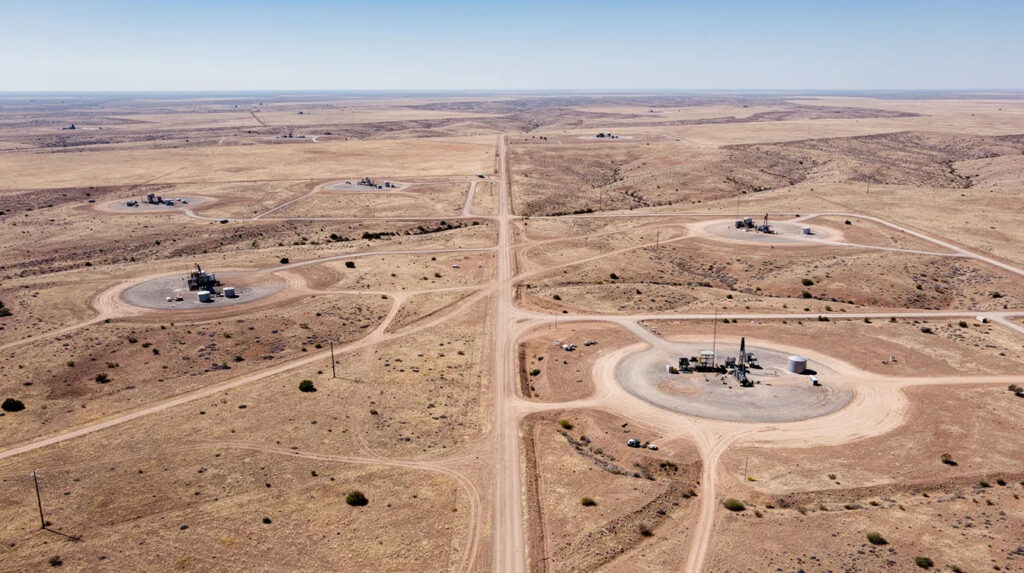
This section gives illustrative examples of the types of oil and gas assets typically offered. These are representative listings with concrete specs, not tied to a specific seller, but reflective of what’s currently moving in the market.
- Small stripper oil lease in Young County, Texas: Approx 4–6 BOPD from 6 shallow wells on ~320 acres, 100% WI / 78% NRI. One well produces approximately 5-6 barrels of oil per day. Asking in the $150,000–$250,000 range, with room for infill drilling and recompletion upside in stacked pay zones, and surrounding acreage that may also appeal for hunting use.
- Natural gas-focused package in western Oklahoma: 15–20 wells in counties like Beckham County or the Texas Panhandle area, producing 300–500 MCFD combined. Some wells require compressors or plunger lifts. Stacked pay zones and recompletion potential offer upside. Price around $300,000–$500,000. Additionally, Oklahoma’s oil leases can produce 60 BOPD across 2120 acres. Current production is about 60 barrels per day across five leases in that state.
- Eagle Ford non-operated working interest (South Texas): 20–40% WI across 3–5 horizontal wells drilled 2018–2022, strong oil and natural gas liquids mix. Detailed JIB and revenue statements available in the data room. A producing oil well for sale in South Texas produces 3 barrels daily without water. A 40 well production package is available in South Texas for $250,000, and 661 acres in South Texas are held by one producing oil well.
- Washington County, Pennsylvania Marcellus royalty interest: 5–10 producing horizontal natural gas wells tied into existing midstream infrastructure, pure royalty interest with no operating liabilities. Asking low- to mid-six figures based on trailing 12-month income.
- Distressed or shut-in well package (Oklahoma/Kansas): 10–25 shut-in oil and gas wells priced at a few hundred dollars per well plus plugging liability, suitable for operators with workover capability. Two active wells in Jackson County, OK are fully equipped. A producing field in Creek County, OK has 30 wells at scale. Two active wells produce conservatively 4-8 barrels of oil daily.
Producing oil wells can generate $8,000-$10,000 monthly income depending on volume. After development, a well can produce 25-125 barrels of oil per day. Oil wells in Texas can produce 3 barrels per day without water on certain conventional leases.
These are representative examples. Browse the live listings for current asking prices, production runs, and legal descriptions.
Types of Oil and Gas Interests You Can Buy
“Oil wells for sale” can mean several different ownership structures, and the differences between them directly affect your risk, cash flow, and level of involvement. Before making offers, every buyer and investor should understand what they’re actually purchasing.
- Operated working interest: The buyer becomes the operator of record. Working interest provides direct ownership and shares in revenue and expenses. You control field operations, LOE, and regulatory compliance. Example: a 100% WI / 80% NRI lease in Young County, TX, where you manage artificial lift, water disposal, and workovers.
- Non-operated working interest: The buyer participates in costs and revenues but does not operate the wells. You rely on the operator’s competence and transparency. Example: a 10% WI in a Washington County Marcellus gas well drilled in 2021, where you receive monthly revenue statements and JIBs.
- Mineral rights and royalties: Mineral rights refer to ownership of the resources beneath the land. You receive royalties (typically 20–25%) and pay zero operational costs. Royalty interest does not involve responsibility for drilling or operating costs. Example: 5 NMA in an active Eagle Ford unit, leased at 25% royalty.
- Overriding royalty interests (ORRI): An interest carved out of the working interest that expires when the lease ends. Suitable for buyers seeking shorter-term exposure without operational risk. Example: a 2% ORRI on Permian Basin production tied to a specific lease term.
How to Evaluate Oil Wells for Sale Before You Bid
Due diligence is the difference between a high-performing asset and an expensive liability. Here’s a checklist of what to examine before placing any offer.
- Production and decline analysis: Review 12–36 months of continuous production data, including daily oil output (BOPD), gas rate (MCFD), and water cut. Calculate monthly and annual decline rates, and compare current rates with IP (initial production) rates. Historical production data can serve as an indicator of reservoir health and economic viability. Production from existing wells declines over time, affecting revenue potential. For example, an Oklahoma stripper well producing 10 BOPD now may have declined 40% from IP, with stable annual decline of 15–20%.
- Reserves and upside: Request reserve reports (1P, 2P, 3P) from qualified engineers where available. Look for stacked pay zones-San Andres, Strawn, Eagle Ford benches, Marcellus/Utica-that provide behind-pipe or recompletion opportunities. Completion methods influence recovery factors in oil wells, and reservoir type impacts recovery factors and operational costs.
- Lease terms and title: Check royalty burdens, depth limitations, HBP (held by production) status, and primary term expiry dates. Verify any pooling or unitization issues. In Young County TX, for example, a lease might have unperforated zones at different depths. In Washington County PA, royalty clauses may allow deductions for transport that reduce actual revenue.
- Operating costs and netback: Estimate LOE including power (electricity for pumpjacks and ESPs), chemicals, workovers, and saltwater disposal. Factor in gathering and transportation fees for natural gas, ad valorem and severance taxes. Conventional vertical wells often run LOE of $3,000 to $8,000/month, while horizontal wells may hit $10,000–$25,000/month. Breakeven prices for many U.S. oil wells land between $30–45/bbl. Depth, thickness, porosity, and permeability affect well deliverability and therefore cost efficiency.
- Infrastructure and access: Evaluate the condition of tanks, flowlines, separators, and saltwater disposal wells. Confirm road access, easements, and proximity to pipelines or gas plants. Seismic data and well logs are essential for geological analysis. State regulatory agencies provide resources for identifying existing wells and checking compliance histories, while operator portfolios and galleries of drilling and production work can offer practical insight into how assets are developed and managed in the field.
These are not efficient markets where every asset is priced perfectly. Disciplined evaluation is how buyers discover mispriced opportunities.
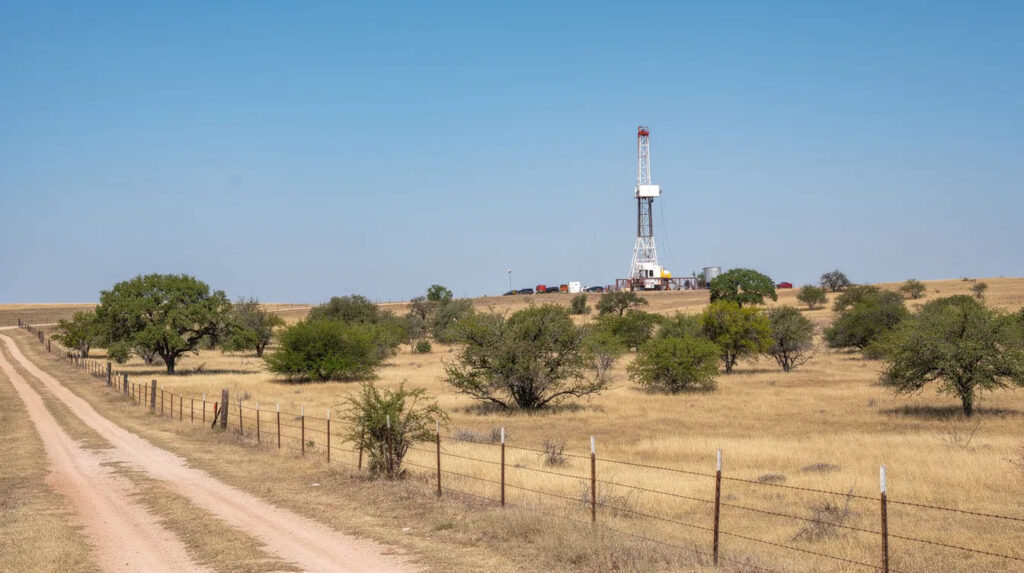
Regional Focus: Eagle Ford and Where Buyers Are Finding Opportunity
Certain counties and plays repeatedly deliver attractive deals for oil gas buyers. Here’s where the action is right now.
- Oklahoma and Mid-Continent: Counties like Custer, Creek, Harper, Beaver, Grady, Beckham County, and Caddo regularly produce packages of producing wells with recompletion and waterflood potential, commonly priced “on request” pending NDA. Investors can acquire mineral rights in Oklahoma’s Anadarko Basin, one of the most prolific in the lower 48.
- Young County and North-Central Texas: Typical small to mid-size leases with shallow conventional oil wells, modest 5–20 BOPD field production, and relatively low entry prices. These properties are often attractive for operators with local workover rigs who can expand production through hands-on management.
- Eagle Ford Shale (South Texas): Many offerings are non-op or minority working interests in horizontal wells with oil and rich natural gas liquids, often drilled after 2016. Early declines are steep, but long tails and predictable cash flow matter for patient capital. Counties like Hidalgo and Starr sit at the southern edge of this play, while core counties closer to the window offer the richest liquids mix.
- Washington County, Pennsylvania and Appalachia: Deals here are often dry gas or wet gas-focused, heavily horizontal, with long lateral wells and large pad developments. Buyers often target royalties or non-op WI in Marcellus and Utica development programs where surface disruption is minimized.
- Other emerging and niche areas: Smaller natural gas and oil fields in Kansas, Arkansas (including White County and Franklin County), Colorado, and East Texas offer distressed and shut-in packages that may be available cheaply. These require strong technical and regulatory expertise, but entry costs are low and consolidation can unlock value. Lots of opportunity exists in these overlooked regions for the right company.
Buying Process: From First Contact to Closing
While every deal is unique, most oil and gas well transactions follow a standard sequence. Serious buyers should be prepared for each phase.
- Initial screening: Buyers review listing summaries for key metrics-county, play, WI/NRI, production, price-and send inquiries for properties that match their criteria. A good list of target basins and minimum production thresholds speeds this step up.
- NDA and data room access: Most sellers require a signed NDA before sharing detailed production runs, revenue statements, engineering reports, and legal documentation. This is standard practice, especially for larger Eagle Ford or Appalachian packages. Sign early to secure access and stay ahead of competing buyers.
- Technical and economic due diligence: Buyers then model cash flows, verify operating expenses, inspect wells and facilities if needed, and may engage engineers or landmen. This phase typically runs 2–6 weeks depending on complexity. Investing in oil leases can yield returns in 2.5 to 6 months from the point of acquisition when assets are already producing, especially when partnering with experienced Texas-based oil and gas operators who focus on underexploited assets.
- Offer, PSA, and closing: Buyers submit LOIs or formal offers, negotiate a Purchase and Sale Agreement (PSA), set conditions precedent (title confirmation, regulatory approvals), then move to funding and closing. Most mid-market deals close within 30–90 days from signed PSA.
- Post-closing transition: Transfer of operatorship or non-op interest requires updating ownership with regulatory agencies (OCC, TRRC, PA DEP) and coordinating with existing operators and purchasers. Email the relevant state commission to confirm transfer timelines.
Risk Management and Regulatory Considerations
Oil wells for sale can come with environmental and regulatory obligations, especially older fields and shut-in wells. Buyers must factor these into pricing, no matter how attractive the headline numbers look.
- Plugging and abandonment (P&A) liability: Even low-priced or $200-per-well shut-in packages can carry substantial future P&A costs. Estimate these by depth, state rules, and current service company pricing. Not all oil wells are successful; some may not cover drilling costs, and P&A obligations can persist long after production stops.
- Compliance and inspections: Review state commission records for violations, spills, mechanical integrity test (MIT) failures, and bond requirements. New owners of wells inherit responsibilities for environmental compliance. Operator competence affects the success of drilling and production of wells, so vet the operating history carefully.
- Surface use and access: Verify surface use agreements, road easements, and any landowner disputes, especially in populated counties like Washington County PA or rapidly developing parts of Texas. The place where the well sits matters as much as the subsurface.
- Commodity price and basis risk: Price volatility significantly impacts income from oil investments. WTI and Henry Hub price swings, plus regional differentials and marketing contracts, can materially change realized revenue for oil and natural gas over the life of the asset. Following WTI crude oil price movements as global supply tightens helps investors understand how macro factors may impact project cash flows. Explore hedging strategies to manage this exposure.
Maximizing Value After You Acquire Oil or Gas Wells
Disciplined operations and targeted capital programs can materially improve returns on acquired assets, especially older or under-capitalized fields. The goal is to maximize every barrel and MCF, and staying on top of oil and gas market news and industry insights can inform when to deploy capital for workovers, recompletions, or new drilling.
- Quick operational wins: Low-cost optimizations such as chemical treatment programs, pump changes, artificial lift tuning, and minor recompletions often pay back in months on small Oklahoma or Young County leases. These don’t require new drilling-just attention to detail.
- Redevelopment strategies: Infill drilling, step-out wells, waterfloods, or CO₂/chemical EOR where applicable can produce step-change output improvements. Prioritize projects based on IRR rather than raw production volumes. Successful wells may provide revenue checks for over 20 years, and successful oil wells can generate long-term passive income from production revenue.
- Technology and data: Modern SCADA, production surveillance, and AI-based optimization platforms have been piloted on thousands of wells in Texas and beyond, helping reduce downtime and LOE. Using better data is one of the fastest ways to cut costs on older assets.
- Tax advantages and portfolio management: Investing in oil wells can provide substantial tax advantages. Intangible Drilling Costs can often be written off against ordinary income, which is a significant benefit for high-income investors. Smart operators recycle capital by selling stabilized, cash-flowing wells or royalty slices while reinvesting into higher-upside new drilling or recompletion projects.
Frequently Asked Questions About Buying Oil Wells
What is the minimum investment to buy an oil or natural gas well interest?
Entry-level opportunities can start below $10,000 for small royalty interests or single shut-in wells in states like Oklahoma or Kansas. More meaningful working interests in producing oil and gas wells often begin in the $25,000–$100,000 range and scale into the millions for larger field packages. Investments in oil wells may involve significant capital up front, so buyers should match deal size to their financial capacity and risk tolerance.
How long does it usually take to close on an oil or gas well purchase?
Small, straightforward royalty or non-op WI deals can sometimes close in 2–4 weeks once title is confirmed. Operated lease packages with multiple wells, regulatory filings, and third-party consents commonly require 30–90 days from signed PSA to final closing and transfer. Complex deals in states with longer regulatory review cycles may extend beyond that window.
Can non-operators or passive investors safely buy into oil and gas wells?
Passive investors typically focus on royalty interests or carefully structured non-operated working interests with reputable operators. They should insist on transparent reporting, clear JIB and revenue processes, and legal review of operating agreements before committing capital. Many prefer to work with trusted domestic oil and gas investment partners that emphasize operational excellence and transparency. Investing in oil wells offers opportunities for portfolio growth but includes risks, so the SEC’s Investor Alerts provide useful guidance on vetting private oil offerings.
How do I estimate plugging and abandonment costs when evaluating a deal?
P&A costs vary by depth, state, and site conditions. Buyers commonly request recent quotes from local service companies, review historical P&A invoices in the area, and add contingencies for surface restoration and regulatory requirements. In Oklahoma, Texas, and Pennsylvania, costs can range from $15,000 for a shallow well to $100,000+ for deeper or more complex completions. Always budget conservatively.
What documentation should I request from a seller before making an offer?
At minimum, ask for 12–36 months of production data, revenue and expense statements, copies of leases and assignments, unit and pooling agreements, title summaries, regulatory filings, and any recent engineering or reserve reports. Well logs and seismic data should be available for technical review. Ideally, all documentation is accessed through a secure data room after signing an NDA. This is standard practice in the industry and any reputable seller will be open to providing it.