
Today’s price of oil only matters to an investor in context. A single quote tells you nothing about whether a drilling project returns capital; the price band over the next several years does. With crude near $84.54, the useful question is which projects work at that level and which were already working twenty dollars lower.
This briefing covers what is driving the crude oil price right now, how the oil price today translates into well-level economics, which risks could reverse the move, and how to evaluate an oil investment against a price band rather than a headline.
If you’ve been watching energy markets this summer, you already know that crude oil has carried significant momentum into mid-2026. With west texas intermediate trading at $84.54 USD per barrel on July 21, 2026, the question isn’t just “where is oil headed?”-it’s “how do I position myself to benefit?” On this page, we break down today’s price of oil, what’s driving it, and why investing with Domestic Drilling and Operating makes strategic sense right now.
Table of Contents
Key Takeaways
- WTI crude oil rose to 84.54 USD/Bbl on July 21, 2026, up roughly 2.50% from the prior trading day, with crude oil prices up 14.46% over the past month and 29.44% compared to last year.
- This sustained uptrend signals more than a short-term spike-it reflects tightening supply, resilient demand, and elevated geopolitical risk premiums in the global economy.
- Today’s oil price environment supports attractive returns for direct drilling and production investments, including those offered by Domestic Drilling and Operating.
- Physical oil projects can serve as potential hedges against inflation and volatility in stocks and bonds, especially with crude prices trending higher.
- You’ll learn how crude oil is priced, what factors are pushing prices upward, and why allocating capital with Domestic Drilling and Operating can be a compelling strategy in 2026’s energy market.
Today’s Price of Oil: Crude Oil Price Snapshot
Crude oil rose to 84.54 USD/Bbl on July 21, 2026, marking a strong session that builds on weeks of upward momentum. Here’s how today’s price compares across key timeframes:
| Timeframe | Approximate Price (USD/Bbl) | Change |
|---|---|---|
| Today (July 21, 2026) | $84.54 | +2.50% from yesterday |
| 1 Month Ago (~June 21) | ~$73.85 | +14.46% gain |
| 1 Year Ago (July 2025) | ~$65.30 | +29.44% gain |
| Quarter-End Forecast | ~$85.38 | Crude oil is expected to trade at 85.38 USD/Bbl by the end of the quarter, suggesting traders see further room to run. The global oil market typically uses wti and Brent as primary benchmarks for pricing. WTI references light, sweet crude delivered to the Cushing, oklahoma hub-the key contract point for most U.S. onshore oil economics. Meanwhile, Brent crude (the North Sea benchmark) is trading at approximately $90 per barrel as of July 21, 2026, reflecting a premium driven by overseas supply pressures and shipping costs.Slight upside expected |
These quoted prices represent reference benchmarks based on OTC and futures contracts, not the exact price of every physical barrel extracted from the ground-but they remain the most reliable proxy for market conditions.
What’s Driving Oil Prices Higher in Mid-2026?
Today’s $84.54 price sits well above levels seen during the 2020–2021 period and is supported by a combination of demand resilience and constrained supply. Crude oil is a key source of energy and a major inflation driver, and several forces are adding pressure simultaneously.
Demand factors: Steady U.S. economic activity, resurgent air travel, and industrial growth across Asia-including china-continue to keep global oil consumption elevated. U.S. gasoline prices have climbed back above $4 per gallon due to increased crude costs, reflecting how tightly supply and demand are balanced at the consumer level.
Supply constraints: OPEC+ production discipline remains tight. Slower-than-expected U.S. shale growth and underinvestment during prior low-price years have delayed large-scale upstream projects. According to the IEA Oil Market Report, global supply buffers have been shrinking at near-record rates.
Geopolitical risk: Geopolitical dynamics significantly influence oil price movements. Drone strikes were attacks on Saudi oil facilities, targeting infrastructure within the kingdom and affecting oil market stability earlier this year. Intermittent disruptions in libya and North Africa have compounded the problem. Most critically, the strait of Hormuz closure affects global oil supply chains, and the EIA’s Short-Term Energy Outlook assumes restricted flow through much of mid-2026, adding a persistent risk premium.
Inventory and financial data: U.S. crude stocks have drawn down by approximately 3.8 million barrels to around 408.4 million barrels in recent weeks. Hedge funds and commodity traders are adding long positions in oil futures, anticipating continued supply tightness through year end and into december.
How Today’s Oil Prices Translate Into Project Economics
Upstream projects-drilling and producing oil-are highly sensitive to crude oil price levels. Profitability is typically measured by breakeven price per barrel, and today’s environment creates a wide margin for efficiently managed operations.
Here’s how the economics work in simplified terms:
- Key cost components: Leasing mineral rights, drilling, completion, and ongoing operating costs
- Revenue: Directly tied to the realized oil price for each barrel of product sold
- Breakeven range: Many onshore U.S. shale and conventional wells break even at $45–$55 per barrel
At $84.54 USD/Bbl, a well with a $50 breakeven generates roughly $34 per barrel in net margin before royalties and transportation, but in contrast, periods when oil prices are falling despite a domestic drilling push can compress margins dramatically and delay new projects. As a general rule, every $10 per barrel above breakeven can significantly enhance return on investment over the life of a well. That type of result makes a meaningful difference in cumulative cash flows over a multi-year production timeline.
Realized prices may be slightly lower than headline WTI due to quality or location differentials, but today’s market still leaves a healthy buffer. Many producers also use hedging-locking in forward prices through futures or swaps-to protect cash flows against short-term swings. In a price band around the mid-$80s per barrel, many plays that were marginal at $65 now become highly economic, creating a favorable environment for new drilling.
Why Investing With Domestic Drilling and Operating Aligns With Today’s Oil Market
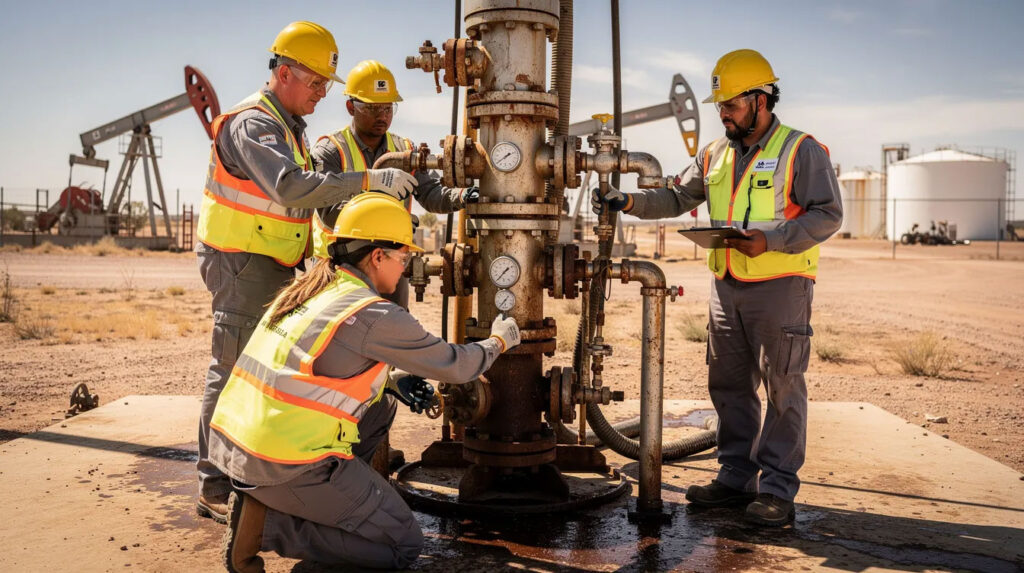
Domestic Drilling and Operating focuses on drilling and operating oil wells, aiming to convert today’s strong crude oil price environment into cash-flowing assets for investors by leveraging deep experience in oil and gas investments. Their approach is built on targeting projects whose breakeven prices sit comfortably below current WTI levels, providing a built-in buffer if prices pull back.
Strategic advantages of partnering with an operator like DDO include: thanks to advanced drilling services and sustainable operating practices that can improve well performance and risk management.
- Access to technical expertise in geology, reservoir engineering, and field operations that most individual investors don’t have
- The ability to use current oil prices to secure favorable service contracts and optimize the timing of completions
- Multi-well program planning that diversifies risk across different formations and locations
- Exposure to physical crude oil production and participation in revenue from barrels extracted and sold each day
Investors in direct drilling projects can also benefit from oil and gas–specific tax incentives, including intangible drilling cost deductions and favorable depreciation schedules. These can enhance after-tax returns meaningfully-though readers should consult independent tax advisors for guidance specific to their situation.
In contrast to purely financial commodities products tied to oil price indices, investing directly with an operator like Domestic Drilling and Operating combines commodity upside with the long-term value of proven producing reserves, especially when you understand Domestic Drilling and Operating’s background as a Dallas-based oil and gas investment firm. That’s a fundamentally different type of exposure than what you’d get from a trade in oil ETFs or futures.
Oil Price Today: Risk Factors and Volatility
While today’s oil prices are favorable, crude oil remains one of the most volatile major commodities. Prices fluctuate based on changing market conditions, including geopolitical developments, and investors must understand the risks.
Key downside risks include:
- A global recession reducing demand sharply
- Rapid growth in alternative energy types reducing long-term oil consumption
- A coordinated production surge from major exporters pressuring supply lower
- Governments implementing carbon regulations or policy shifts that increase operating costs
Project-level risks also matter: geological uncertainty, cost overruns, mechanical issues during drilling and completion, and natural production decline curves that steepen over time. Inflation and labor shortages in oilfield services can erode margins even when oil prices remain high.
Disciplined operators like Domestic Drilling and Operating manage these risks through careful prospect selection, conservative price forecasts, cost control, and diversification across wells, and many common concerns are addressed in their oil and gas investment FAQ. Investors should view oil investments as part of a diversified portfolio, sized appropriately for their risk tolerance, and seek professional financial advice where needed.
How to Evaluate an Oil Investment Opportunity Today
High oil prices alone don’t guarantee good returns. The quality of the specific project and operator is critical. Here’s what to look for:
Key metrics to review:
- Estimated ultimate recovery (EUR) per well
- Projected breakeven price per barrel
- Internal rate of return (IRR) assumptions at multiple oil price scenarios ($60, $70, $80, $90/Bbl)
- Cash flow timelines and production decline curves
Ask Domestic Drilling and Operating for transparent project models showing cost breakdowns so you can see how today’s oil price feeds into potential returns, and use their contact page to initiate that discussion directly. Review the operator’s track record-historical well performance versus type curves, safety record, and consistency in meeting cost and schedule estimates provide essential information.
Consider liquidity and exit strategy as well: expected project life, options to sell interests, and whether returns are primarily cash flow, appreciation in reserves value, or both. With crude oil around $84.54, projects that still perform well under more conservative price cases stand out as especially attractive. Visit Domestic Drilling and Operating’s website to learn more about current offerings, sign up as a qualified investor, and request detailed economic models for any project on their page.
FAQ: Oil Prices and Investing With Domestic Drilling and Operating
Below are answers to common questions readers ask after reviewing today’s price of oil and considering direct energy investments.
Is now a good time to invest in crude oil projects?
With WTI around $84.54 and strong year-over-year gains, project economics are generally favorable for those seeking u003ca href=u0022https://www.domesticoperating.com/u0022u003esome of the best oil and gas investments in Dallasu003c/au003e. However, each investment should be evaluated on its own merits. Timing matters less if you focus on projects with low breakeven prices and conservative planning rather than speculating purely on short-term oil price spikes.
How are returns from Domestic Drilling and Operating different from buying oil ETFs or futures?
Oil ETFs and futures primarily track the price of crude oil and can be affected by contract rolls and market structure. Investments with Domestic Drilling and Operating are tied to physical production and long-term reserves. Direct project participation generates ongoing cash flow from produced barrels, while many financial products provide price exposure without underlying production.
What minimum investment and time horizon should I expect?
Minimum investment levels vary by project and are typically higher than a retail stock purchase, reflecting the capital intensity of drilling. Investors should generally plan for a multi-year time horizon, since wells take time to drill, complete, ramp up, and then produce over several years before reaching their end of productive life.
How do changing oil prices affect my potential income from a well?
Revenue from a producing well is directly linked to realized oil prices-higher prices typically mean higher cash distributions. Some production may be hedged, which can smooth income but also cap upside during periods of very high prices. Review each project’s hedging strategy with Domestic Drilling and Operating before committing.
What due diligence should I perform before investing?
Review offering documents, independent geological and engineering reports, operator track record, and third-party reserve evaluations where available. Consult an independent financial or legal advisor to ensure the investment fits your objectives, risk tolerance, and tax situation before committing capital.
How Today’s Price of Oil Converts Into Well Economics
A well economics model needs four inputs: the realised price per barrel, the operating cost per barrel, the decline curve, and the capital cost of the well. Today’s price of oil feeds only the first, and even there it must be adjusted for the basis differential between the benchmark and what the purchaser actually pays at the lease.
At a benchmark near the mid-eighties, a typical onshore project in a core basin clears its full cycle cost comfortably, which is why activity tends to firm at these levels. The margin of safety, not the headline profit, is what a conservative investor should be measuring.
The decline curve is where most optimism hides. Shale wells deliver a large share of total recovery in the first two years, so a model that applies today’s price across a flat production profile will overstate returns substantially. Ask for the type curve and check it against offset wells.
Finally, separate the price assumption from the project assessment. A project that requires the current crude oil price to work is a price bet. One that works fifteen or twenty dollars lower is an operating investment. The working interest guide covers how to read the cost side.
What Could Move Oil Prices From Here
On the upside, supply disruption remains the fastest mover: sanctions enforcement, a chokepoint incident or an unplanned outage in a major producer can add several dollars within a session. Sustained demand strength, particularly from Asian petrochemical and aviation consumption, works more slowly but lasts longer.
On the downside, the two candidates are OPEC+ policy and demand. Additional quota increases into a soft market would pressure prices, as would a growth slowdown that reduces freight and industrial fuel consumption. Both effects are gradual and show up first in inventory data rather than in headlines.
The scenario most investors underweight is simply range-bound prices. Markets spend more time drifting inside a band than breaking out of one, and a project underwritten for the middle of that band is the most likely to perform as modelled.