
WTI vs Brent Crude Oil (What are the differences)
What Is West Texas Intermediate (WTI)?
West Texas Intermediate, often written as WTI or west texas intermediate, is a specific grade of crude oil and one of the most important benchmarks in North American petroleum markets. Financial media usually quote the “WTI price” as the front-month NYMEX futures contract, expressed in U.S. dollars per barrel.
WTI crude is known as light crude oil and sweet crude because it has low density and low sulfur content. Its API gravity is typically around 39–41°, and its sulfur levels range between 0.24% and 0.34%. That chemical composition means WTI yields a high percentage of valuable products like gasoline and diesel.
Despite the name, not every barrel comes directly from west texas. Production comes from the Permian Basin in Texas, the Midcontinent, and other U.S. regions, including prolific Texas oil formations such as the Permian Basin and Eagle Ford, where oil and gas drilling rigs have recently hovered near a three‑year low, then is priced around deliveries into Cushing, Oklahoma.
What Is Brent Crude (Brent)?
Brent Crude, commonly referred to simply as Brent, is a major global benchmark for pricing crude oil. Originating from the North Sea oil fields, Brent represents a blend of several light, sweet crude oils including Brent, Forties, Oseberg, Ekofisk, and Troll, collectively known as the BFOET basket. This blend is widely used as a pricing reference for about two-thirds of the world’s internationally traded crude oil, making it one of the world’s most important indicators in global energy markets.
Brent crude is characterized by its relatively low density and moderate sulfur content, which classifies it as a light sweet crude oil. While slightly heavier and with a bit more sulfur than West Texas Intermediate (WTI), Brent remains easier to refine than heavier, sour crude oils. Its quality and accessibility via tanker shipments from the North Sea make Brent a preferred benchmark for many refiners and traders around the world, especially in Europe, Africa, and Asia.
Unlike WTI, which is landlocked and primarily serves the North American market, Brent’s seaborne nature allows it to reflect global supply and demand dynamics more directly. Factors such as geopolitical events in the Middle East, OPEC+ production decisions, and international freight rates significantly influence Brent prices. As a result, Brent crude plays a pivotal role in shaping worldwide crude oil pricing and energy policy decisions.
Physical Characteristics and Quality of WTI Crude
Crude oils globally are evaluated based on density, meaning light vs. heavy, and sulfur content, meaning sweet vs. sour. These traits affect price, refining costs, and the number of high-value products refineries can make.
WTI’s main quality features are:
Quality factor | Typical WTI profile | Why it matters |
|---|---|---|
API gravity | 39–41° | Light oil is easier to process |
Sulfur | 0.24%–0.34% | Lower desulfurization cost |
Category | Light sweet crude oil | Strong gasoline, jet fuel, and diesel yields |
Trade grade | Exchange-specified blend | Must meet quality rules |
WTI is easier to refine compared to many other crude oils because of its low sulfur content and light composition. Platts and Argus publish detailed WTI crude specifications and assessments for trading purposes, helping buyers and sellers understand which blends qualify. |
|
|
In practice, “WTI” is a blend from multiple west texas and nearby fields that meets strict lightness and sweetness requirements. |
The Role of Cushing, Oklahoma in WTI Pricing
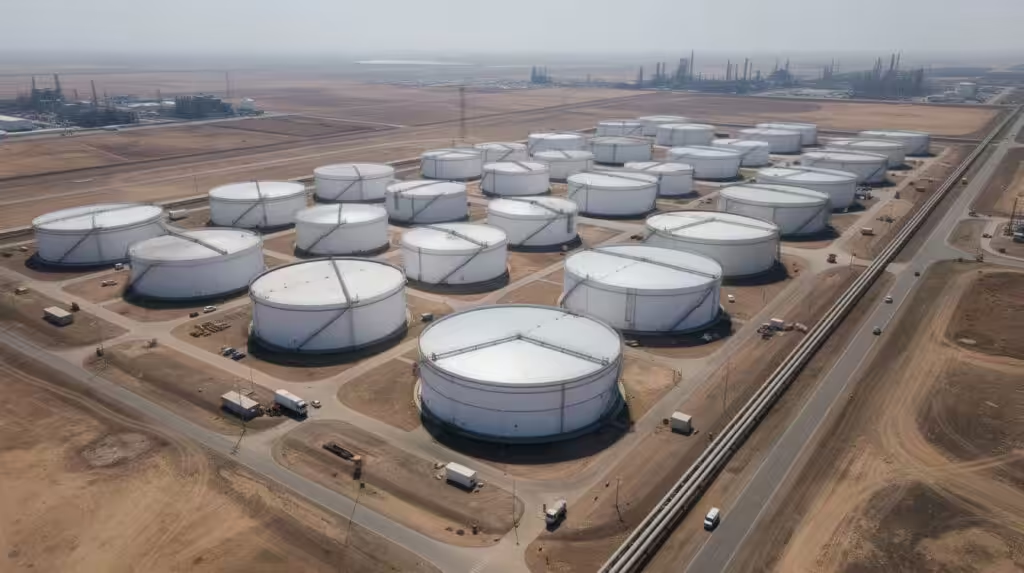
Cushing, Oklahoma is the main delivery point for physical exchange and price settlement for WTI. It is often called “The Pipeline Crossroads of the World” because pipelines connect the site to the Permian Basin, Midcontinent production, refineries, and the U.S. Gulf Coast.
The Cushing hub has a storage capacity of 90 million barrels and accounts for 13% of U.S. oil storage, with an inbound and outbound capacity of 6.5 million barrels a day. That oil storage network is a strength, but it also creates a risk: WTI pricing is sensitive to local infrastructure constraints due to its landlocked delivery hub.
When tanks fill or pipeline space is limited, WTI can trade at an unusual discount to Brent. This concentration also helped explain the April 2020 negative price event, when futures trading spilled into physical settlement concerns.
Brent crude is characterized by its relatively low density and moderate sulfur content, which classifies it as a light sweet crude oil. While slightly heavier and with a bit more sulfur than West Texas Intermediate (WTI), Brent remains easier to refine than heavier, sour crude oils. Its quality and accessibility via tanker shipments from the North Sea make Brent a preferred benchmark for many refiners and traders around the world, especially in Europe, Africa, and Asia.
Unlike WTI, which is landlocked and primarily serves the North American market, Brent’s seaborne nature allows it to reflect global supply and demand dynamics more directly. Factors such as geopolitical events in the Middle East, OPEC+ production decisions, and international freight rates significantly influence Brent prices. As a result, Brent crude plays a pivotal role in shaping worldwide crude oil pricing and energy policy decisions.
Testimonials
Read What Real Investors Say about Domestic Drilling & Operating
Here are some reviews from our clients about our turnkey Oil and Gas Investment Opportunities and their outcomes.
4.9/5 Rating
Development of the WTI Crude Oil Market
The physical WTI market began after the U.S. government’s decontrol of oil prices on January 28, 1981, which allowed WTI crude oil to trade under spot prices centered around Cushing, Oklahoma, Midland, Texas, and Houston, Texas.
NYMEX introduced the WTI Light Sweet Crude Oil futures contract in 1983 to help producers, refineries, and traders manage price volatility. Over time, spot trading and futures markets reinforced each other, turning a regional crude into a global benchmark.
Price Reporting Agencies such as Platts and Argus began assessing WTI-linked grades based on real transactions. Producers in countries such as Saudi Arabia, Kuwait, Iraq, Colombia, and Ecuador have also used WTI-related assessments and futures when pricing barrels exported into the U.S. and the Americas.
The explosive growth of the U.S. shale boom transitioned the nation into a major global supplier, impacting WTI pricing and making Gulf exports central to today’s oil markets, even as many U.S. shale oil production costs are projected to rise toward higher breakeven levels and oil executives warn of an industry‑wide slowdown amid market uncertainty.
NYMEX WTI Futures and Financialization of Oil Markets
The WTI futures contract is one of the most actively traded energy derivatives in the world, with over 1 million contracts traded daily. The CME Group contract trades under the symbol CL and represents 1,000 U.S. barrels of WTI crude oil.
Prices are quoted and settled in us dollars and cents per barrel, with a minimum tick size of $0.01 per barrel, or 1 cent per barrel. Monthly contracts are listed far forward for hedging, investment, and trading.
Cushing, Oklahoma serves as the primary delivery point for WTI futures contracts, which has been a major trading hub for crude oil for over three decades. The final trading day and expiry are set by NYMEX business day rules tied to the month before delivery, and trading comes to an end under those rules before delivery obligations arise.
Since the early 2000s, market participants such as hedge funds, pension funds, ETFs, and index funds have increased their role. These flows can affect the forward curve, storage economics, and roll yields, a theme frequently explored in oil and gas market trend and pricing analysis blogs. The trading of WTI futures contracts can influence physical WTI spot prices, as abnormal futures transactions and a lack of buyers may drive spot prices, as seen on April 20, 2020, when WTI futures prices turned negative.
Brent Crude: The Other Global Benchmark
Brent crude is the main global benchmark for seaborne oil. It began with the Brent field in the North Sea, but modern Brent pricing now uses a broader BFOET basket: Brent, Forties, Oseberg, Ekofisk, and Troll.
Brent is also a light, sweet crude, though usually a bit denser and slightly higher in sulfur than WTI. Brent futures trade on ICE in London and are widely cited as the reference for a large share of internationally traded crude.
Because Brent is waterborne, it responds strongly to OPEC+ decisions, Middle East risk, North Sea supply, freight rates, and demand from Europe, Africa, China, and much of Asia, so surprise OPEC+ supply increases and strategy shifts can trigger sharp oil price plunges. In short, Brent reflects global seaborne conditions more directly than landlocked WTI.

WTI vs. Brent: Quality, Location, and Market Differences
Both Brent and West Texas Intermediate are light, sweet crude benchmarks, but the difference lies in quality, location, and market exposure.
Feature | WTI | Brent |
|---|---|---|
Main role | U.S. benchmark | Global seaborne benchmark |
Pricing hub | Cushing, Oklahoma | North Sea cargo market |
Quality | Lighter, sweeter | Light, sweet, slightly more sulfur |
Logistics | Inland pipelines | Tanker-accessible |
Main sensitivity | U.S. supply, storage, shale | Global demand, freight, geopolitics |
WTI is marginally superior for refining, but Brent often trades at a premium because international buyers can access it by tanker. WTI must be transported from inland hubs to the gulf, Gulf Coast refineries, or export terminals, adding cost, time, and sometimes insurance and freight risk. |
|
|
WTI reacts more to U.S. production and storage. Brent reacts more to global disruptions, including issues involving countries around the Middle East, Africa, Europe, and major Asian importers. |
|
|
The Brent–WTI Spread: Why Prices Diverge
The Brent–WTI spread is the price difference between Brent crude and West Texas Intermediate, usually quoted as Brent minus WTI in USD per barrel. Market analysts track the price gap between WTI and Brent Crude because it reflects U.S. shale production and transportation costs, as well as long‑term supply–demand expectations like those in OPEC’s crude oil demand and investment gap forecast and episodes when WTI crude oil prices drop sharply below key levels such as $62 per barrel.
Historically, WTI crude oil traded at a premium to Brent crude oil before 2011 because it was slightly higher quality. Since the shale oil boom in the 2010s, WTI has often traded at a discount to Brent.
In February 2011, WTI was priced at approximately $85 per barrel while Brent was at $103 per barrel, largely due to a surplus of oil in North America and geopolitical tensions affecting Brent prices. The price difference between WTI and Brent, known as the Brent-WTI spread, is influenced by transportation costs, local supply and demand dynamics, and geopolitical events, as well as periods of global oversupply and steady oil prices despite changing Middle East tensions.
After the crude export ban ended in December 2015 and new pipelines connected inland barrels to the Gulf Coast, the discount narrowed. Still, Brent frequently keeps a modest premium because it reflects seaborne trade and global risk.
Recent Shifts: WTI Surpassing Brent and Its Global Implications
Historically, West Texas Intermediate (WTI) crude oil has traded below Brent crude prices since the U.S. shale boom began in the 2010s. This discount largely reflected the landlocked nature of WTI, with transportation bottlenecks and limited pipeline capacity from inland hubs like Cushing, Oklahoma, to export terminals on the Gulf Coast. Meanwhile, Brent crude, being seaborne and globally accessible, commanded a premium due to its broader market reach and sensitivity to international geopolitical events and freight rates.
However, recent developments have seen WTI prices surpass Brent, signaling a significant shift in the global oil landscape. This inversion suggests improvements in U.S. infrastructure, such as expanded pipeline capacity and increased export flexibility, reducing the traditional transportation constraints that kept WTI discounted and supporting new investment‑focused perspectives on oil and gas development projects. Additionally, shifts in global supply-demand dynamics, including changes in OPEC+ production policies, tightening global supply that can drive WTI price surges, and geopolitical tensions affecting Brent-linked markets, have contributed to this pricing crossover.
The implications of WTI surpassing Brent extend beyond North America. It reflects the growing influence of U.S. crude on global oil pricing and underscores the interconnectedness of regional and international markets. For global oil prices, this shift may lead to narrower differentials between benchmarks, influencing trading strategies, refining economics, and investment decisions worldwide, especially when WTI oil prices plunge below $60 yet major energy companies maintain resilient strategies. It also highlights how infrastructure and geopolitical factors continue to shape the relative value of crude oils, impacting energy costs and market stability across the globe.
Infrastructure, Freight Rates, and Global Flows
Infrastructure is the bridge between WTI and the world. Pipeline capacity from west texas and Cushing to the Gulf Coast determines how quickly U.S. crude can reach export terminals and compete with Brent-linked barrels.
When pipeline capacity is tight, WTI can weaken. When exports flow easily to Mexico, Europe, or Asia, arbitrage helps close the spread. Higher tanker freight rates can widen the Brent premium because U.S. cargoes become less competitive after transport, fuel, and insurance costs, particularly when oil prices are falling despite increased drilling activity and shifting global demand patterns.
Freight rates are shaped by bunker fuel prices, vessel supply, regulations, and demand for floating storage during oversupply. New crude streams, including WTI Midland cargoes delivered into Europe, are also changing how Brent and WTI interact, particularly as U.S. oil and gas rig counts remain near multi‑year lows in key basins like the Permian and Eagle Ford.

Why WTI and Brent Matter for Businesses and Investors
WTI and Brent are not just market headlines. They are reference prices for governments, airlines, refineries, producers, trading desks, and investors.
Physical supply contracts are often priced as “Brent plus/minus X dollars per barrel” or “WTI plus/minus X dollars per barrel.” North American firms often hedge with WTI futures and options, while global or seaborne exposure is commonly hedged with Brent derivatives; exchange-cleared contracts can improve risk-management efficiency and support a reduction in collateral needs or operating costs when paired with specialized experience in structuring oil and gas investments.
Investors can find exposure through futures, ETFs, ETNs, producer shares, and refinery stocks, but they must also consider how evolving energy and climate policies reshape long-term oil and gas investment risks and how climate policy is reshaping oil and gas working‑interest strategies through 2025. Policymakers also watch WTI and Brent curves to infer future supply-demand balances, inventory trends, and possible impacts on gasoline and diesel prices.
If you want to understand crude oil prices today, track both benchmarks. WTI tells you a lot about U.S. infrastructure and shale. Brent tells you more about the global oil balance.
Key Takeaways
West Texas Intermediate (WTI) and Brent Crude are the two primary benchmarks for crude oil pricing, with WTI serving as the main benchmark for U.S. oil markets and Brent representing global seaborne crude oil trade.
WTI is a light, sweet crude oil priced at Cushing, Oklahoma, characterized by its low sulfur content and inland delivery hub, which can create pricing sensitivity due to infrastructure constraints.
Brent crude, slightly heavier and with higher sulfur content than WTI, trades at seaports in the North Sea, making it more exposed to global supply, demand, geopolitical events, and freight rate fluctuations.
The Brent–WTI price spread reflects differences in quality, location, transportation costs, and market dynamics; historically, WTI traded at a premium due to its quality but has often traded at a discount since the U.S. shale boom and pipeline bottlenecks.
Changes in U.S. infrastructure, export capacity, and global oil market developments influence how WTI and Brent prices interact, with their futures markets on NYMEX and ICE respectively shaping risk management, investment products, and global crude pricing.*
Frequently Asked Questions (FAQ)
Is WTI or Brent more important for global crude oil pricing?
Brent crude is generally the primary global benchmark because it is used for much of the world’s seaborne crude oil trade. WTI is dominant for North American crude oil pricing and remains one of the world’s most liquid financial benchmarks.
Both matter because traders and refiners arbitrage the two prices over time, adjusted for location, quality, freight, and storage. For a U.S. producer, WTI may matter more. For an international buyer, Brent is often the better reference.
Why did WTI futures prices briefly turn negative in April 2020?
On April 20, 2020, the prompt NYMEX WTI contract settled below zero after COVID-19 crushed oil demand and Cushing storage was nearly full. Holders of expiring futures faced delivery obligations without affordable storage, so some paid others to take contracts.
The U.S. Energy Information Administration cited this as a rare collision of collapsing demand, storage limits, and futures expiry mechanics. Brent fell sharply too, but it did not turn negative because seaborne barrels had more flexible storage and shipping options.
Which benchmark better reflects gasoline and diesel prices at the pump?
In the United States and Canada, retail fuel prices tend to track WTI-linked refinery input costs more closely, plus refining margins, distribution costs, and taxes. In Europe, Africa, and much of Asia, fuel prices are more closely tied to Brent and local tax systems.
However, fuel markets are integrated. Large moves in either benchmark can eventually affect buyers worldwide.
Can other crude oils replace WTI or Brent as main benchmarks?
Other benchmarks such as Dubai/Oman and Murban are increasingly important, especially for Asian flows. But WTI and Brent remain deeply liquid, widely trusted, and embedded in long-term contracts, even as the broader oil and gas industry faces transformational shifts driven by climate pressures and new technologies and new regulatory changes in the oil and gas industry alter costs and opportunities for investors.
Benchmark systems can evolve. Brent expanded into the BFOET basket, and WTI Midland cargoes now influence European pricing. Complete replacement is unlikely in the near term.
How can an individual investor gain exposure to WTI or Brent prices?
Common routes include buying NYMEX WTI futures, ICE Brent futures, crude-linked ETFs or ETNs, or shares of oil producers and refineries. Each route has different risks.
Futures and leveraged products can involve volatility, margin calls, contango roll costs, and rapid losses. Before trading oil-linked instruments, understand the benchmark, contract specifications, and your own risk tolerance, whether you are considering public markets or direct oil and gas investments in Texas-based drilling projects.
Domestic Drilling & Operating News
Get The Latest From Our Oil and Gas News
Read and update the latest news from us, we have lots of the latest news about the oil and gas investing product.



Check out our other blog articles for recent news.