
Oil and Gas Well Investing: What To Know Before You Invest
Introduction to Oil and Gas Well Investing
Oil and Gas Well Investing means purchasing fractional ownership in physical wells drilled across prolific U.S. basins with Domestic Drilling and Operating. Unlike buying energy stocks or ETFs, direct investment places you at the center of drilling economics—your returns flow from actual hydrocarbons extracted and sold at prevailing gas prices and oil benchmarks. Gas investment opportunities are also a key part of this broader appeal, offering investors access to both oil and gas projects with attractive features.
In 2022, the U.S. became the world’s largest oil and gas producer, surpassing Saudi Arabia by more than one-third, with crude oil production rising from 83 million barrels per day in 2005 to over 104 million barrels per day by early 2024. As of 2024-2025, the U.S. remains the world’s largest producer, outputting over 13.2 million barrels of crude daily. This guide serves qualified investors exploring monthly cash flow, substantial tax advantages, and the potential benefits of oil and gas well investing, such as passive income and portfolio diversification, along with long-term wealth-building through oil gas investing.
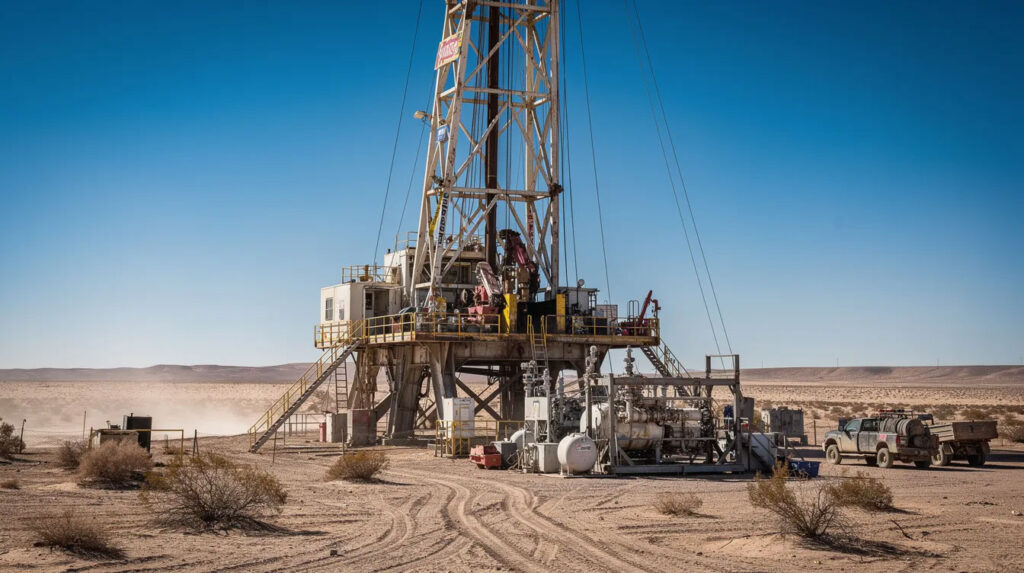
How do Oil and Gas Well Investments Work?
Investors contribute capital to fund drilling and completion of targeted oil wells or gas wells. Participation is often structured as a direct working interest, allowing investors to directly participate in wells without intermediaries and gain access to projects typically reserved for institutional investors. In return, they receive proportional shares of revenue after royalties and operating expenses are deducted.
The typical well lifecycle includes:
| Phase | Description |
|---|---|
| Leasing | Securing mineral rights via competitive bidding |
| Geology | 3D seismic surveys to identify reservoir targets |
| Drilling | Spudding and rotary drilling operations |
| Completion | Hydraulic fracturing (30-50 stages in shale plays) |
| Production | Multi-year output with natural decline curves |
Revenue derives from production sold at benchmarks like West Texas Intermediate for oil ($70-90/barrel in 2025-2026) and Henry Hub for natural gas. Revenue from oil and gas investments is directly tied to volatile commodity prices influenced by geopolitical issues, supply, and demand. Investors typically receive monthly or quarterly distributions, with early payouts recovering drilling costs and later years providing residual passive income.
Types of Oil and Gas Well Interests
Your investment structure dramatically affects risk, return, and tax treatment. Understanding each option is crucial for making informed decisions.
Working Interests: Direct ownership sharing revenue and operating expenses as a non-operating partner. Higher risk (exposure to dry holes and costs) but enables 100% intangible drilling cost deductions and potential active income treatment.
Royalty Interests: Revenue shares (typically 2-5%) without cost responsibilities. Lower volatility but capped upside, with 15% depletion allowances available.
Limited Partnerships: Pooled investor capital across multiple wells, simplifying administration through K-1 reporting. These structures help achieve diversification across a single drilling project or entire gas fields, often leveraging specialized drilling services and sustainable operating practices.
Active versus passive income categorization varies by structure—working interest holders may offset active income with losses, while royalty holders face passive income limitations, which underscores the importance of working with an experienced oil and gas investment firm that can help structure offerings appropriately.
Strategic Approach to Oil and Gas Well Investing
Disciplined strategy is essential given geological risk, commodity price volatility, and dry-hole possibilities that make this energy sector investment highly speculative, underscoring the value of partnering with experienced oil and gas investment operators.
Basin selection matters: Focus on Tier 1 plays with extensive production history:
- Permian Basin: 6+ million barrels daily, proven EUR exceeding 500 MBOE
- Bakken/Williston: Horizontal drilling yields 600-1000 MBOE per well
- STACK/SCOOP: Natural gas-heavy with reliable type curves
Diversification is critical: Spread capital across 5-15 wells and operators rather than concentrating in a single oil and gas project. This reduces portfolio dry-hole risk from 20-30% to under 5%.
Target metrics for evaluation: 18-36 month payback period, 50-100% IRR over five years, and $45-60/BOE break-even. Due diligence includes reviewing operator track records (target 95%+ success rates), geological reports, offset well performance, and AFE budgets.
Return Potential and Cash Flow Dynamics
Oil and gas assets can generate rapid early cash flow and long-tail residual income, though outcomes vary widely.
Production decline behavior:
- Initial production (IP): 600-1200 BOE/day
- Year-one decline: 60-80%
- Long-tail production: 5-20 years at 5-10% annual decline
Monthly net distributions are calculated as gross revenue minus royalties (20-25%), operating expenses ($6-12/BOE), severance taxes (4-8%), and gathering fees.
A hypothetical Permian well might target 100% capital payback within 24-30 months, with total ROI exceeding 150-200% if commodity prices remain favorable. Unlike leveraged investments, returns here depend on geology, execution, and market prices—not financial engineering.

Tax Advantages of Oil and Gas Wells
U.S. tax policy intentionally incentivizes domestic energy development, making oil and gas one of the most tax-favored asset classes for direct participation, a topic covered in depth in our oil and gas investment tax FAQ.
Intangible Drilling Costs (IDCs): Labor, site prep, drilling fluids, and other non-salvageable expenses—representing 60-80% of total well cost—can be deducted 100% in year one. This provision creates potential tax benefits that dramatically reduce effective investment costs, as detailed in our guide to intangible drilling cost tax deductions.
Tangible Costs: Casing, equipment, and pumps depreciate over 7 years via MACRS, adding ongoing taxable income offsets.
Percentage Depletion: Qualifying small producers can deduct 15% of gross well income (subject to IRS limits), stackable with IDCs for 85-100% first-year write-offs.
Working interest holders may classify income as non-passive, offsetting wages and business income—a significant advantage over other asset classes. Energy provisions remain subject to budget discussions; consult your CPA for personalized tax advice.
Risk Factors and How to Manage Them
Oil and gas well investing involves meaningful capital loss risk and is unsuitable for investors requiring liquidity or capital preservation.
Key risks include:
Dry holes (10-30% failure rate in exploration)
Commodity price volatility (WTI swings of 20-50% annually)
Regulatory changes (EPA methane rules, state drilling restrictions)
Cost overruns (15-25% AFE exceedances)
Operator defaults or performance issues
Gas assets and oil investments are illiquid—secondary markets exist but are thin. Plan for 5-10 year holding periods while monitoring how regulatory changes in the oil and gas industry may affect project economics and exit options.
Risk management strategies:
Invest only risk capital (5-15% of investment portfolio)
Diversify across successful wells and operators
Stress-test economics at $40-50/BOE prices
Verify operator track records and past performance
No projection guarantees future results.
Who Can invest in an Oil and Gas Well?
Most direct oil well investment offerings are restricted to accredited investors under U.S. securities regulations—individuals with $1 million+ net worth (excluding primary residence) or $200,000+ annual income.
Ideal investor profiles:
High-income professionals seeking tax incentives through targeted oil and gas investments in Dallas
Business owners wanting inflation-hedged monthly cash flow
Family offices diversifying 5-10% into energy assets by partnering with Dallas-based exploration and development specialists
Investors should accept K-1 complexity, multi-state filings, and long holding periods. Conservative investors may prefer indirect exposure via MLPs (6-8% yields), dividend-paying oil and gas companies, or energy funds, especially when considering how evolving energy policies shape long-term oil and gas investments.
How Do I Evaluate an Oil and Gas Well Investment?
Thorough evaluation protects capital and maximizes returns in this crucial energy source sector, particularly as climate policy continues to reshape working interest investments.
Operator due diligence:
Years in business and wells drilled
Historical success rates (target 90%+)
Regulatory compliance and safety record
Geology and engineering:
Basin location and reservoir type
Depth, porosity, and comparison with offset wells
Type curves and estimated ultimate recovery
Offering document review:
Price deck assumptions ($60-80 oil)
EUR projections and decline curves
Fee structures (avoid >2% promotes or excessive marketing markups)
Consult independent legal and tax advisors before signing subscription documents, and understand how specialized oil and gas tax benefit structures can influence your after-tax returns.
Getting Started: Steps for Interested Investors
Moving from curiosity to actual participation requires deliberate action and a clear grasp of why domestic oil and gas can be a compelling asset class.
Confirm accredited investor status or begin the process to sign up as a qualified oil and gas investor
Define risk tolerance and target allocation (typically 5-15% of investable assets)
Clarify investment goals: cash flow versus growth priorities
Build operator shortlist and request project packages
Review private placement memorandum (PPM) and historic results, including any documented gallery of past drilling projects and performance
Execute subscription agreements, contact the operator to coordinate funding logistics, and fund capital calls
Plan for annual K-1 forms and potential multi-state filings (TX, OK, ND, NM)
First production typically occurs 3-9 months after spud date.
Key Takeaways
Direct oil and gas well investing is an attractive option for accredited investors due to its high income potential, substantial tax benefits, and diversification benefits beyond traditional stocks and bonds.
Investors participate in oil and gas investment opportunities through working interests, royalty interests, or limited partnerships—each structure carries distinct risk, control, and taxation profiles.
U.S. oil production exceeded 13 million barrels daily in 2023-2024, creating strong demand for new wells across proven basins.
Tax incentives including intangible drilling cost deductions (60-80% of well costs) and depletion allowances can dramatically improve after-tax returns for high earners.
These oil and gas investments are illiquid and highly speculative—disciplined due diligence, operator experience, and diversification across multiple wells are essential to maximize returns and manage risk.
The oil and gas sector has a low correlation with the S&P 500, offering potential diversification against traditional market volatility and inflation. Oil and gas investments can also serve as a hedge against inflation, helping maintain portfolio stability when other asset classes fluctuate.
Testimonials
Read What Real Investors Say about Domestic Drilling & Operating
Here are some reviews from our clients about our turnkey Oil and Gas Investment Opportunities and their outcomes.
4.9/5 Rating
Domestic Drilling & Operating News
Get The Latest From Our Oil and Gas News
Read and update the latest news from us, we have lots of the latest news about the oil and gas investing product.


Check out our other blog articles for recent news.